1/29/19
Dear friends,
Escaping the weather and Trump with another stay in Kigali. Always makes me feel guilty, but I do have lots to share with you about the work and challenges facing the WE-ACTx program here.
Most exciting news first. At a national meeting to review new 2019 Rwandan Ministry of Health HIV management guidelines, WE-ACTx for Hope (WFH), the WE-ACTx supported clinic in Kigali, was applauded as Number 1! WFH led every other clinic in Kigali in having the most patients with viral suppression, including youth, and best retention of all patients. Dr. Sabin Nsanzimana, Division Manager of HIV Disease Prevention and Control, Rwanda Biomedical Center personally called Chantal Benikegeri, WFH Director, by phone to congratulate her.
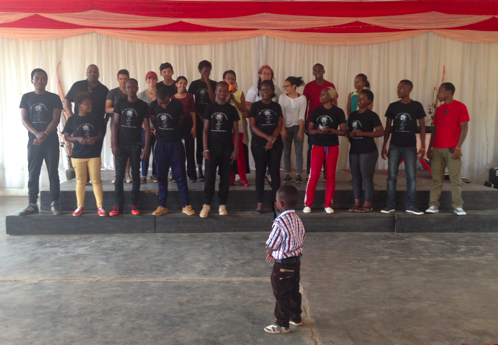
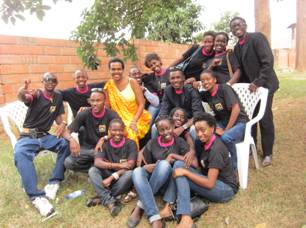
This achievement reflects much growth and hard work over the past year. The clinic now serves 2228 patients, a 9% increase over last year. Two thirds of the patients are stable and regularly attending their quarterly clinic and pharmacy visits, significantly above the country’s 50% level, and most of the other patients will be transitioned from monthly visits to this program as well. This system of fewer visits (with some also moving to 6 month visits), moving from monthly visits is greatly reducing staff workload and patient burden. Standardized measures of quality are also very high, with over 93% of all WFH patients having complete viral load suppression (to undetectable levels). Compare this to current U.S. studies reporting viral suppression rates of 86%, and finding racial disparities within this rate. Here’s a picture of the clinic staff after hearing the good news of the winning their award as the top clinic.
This expansion of the number of patients served by the clinic has also been accompanied by additional funding. Chantal successfully secured new funding from the Global Fund, an increase from the combined KCA-United Purpose fund, and a new grant from Elma Philanthropies. This diverse funding has helped sustain WFH’s strong status in Kigali.
The program faces many challenges, of course. The clinic now provides perinatal maternal to child transmission treatment (PMTCT) for about 30 women, but because of lack of space, they transfer the newborns out to district clinics for vaccinations and follow up. There were 120 babies born with HIV in Rwanda last year (a transmission rate of 1.5%) though no babies born infected at WFH. The new mothers at WFH would prefer to complete follow-up of their babies (all HIV-) at the WFH clinic, where they have developed trusting relationships, but this is not yet possible, as WFH cares only for those who have HIV.
The clinic has a new partner notification program in which patients agree to 1) tell their partners about their HIV infection and encourage them to get tested and care if needed, or 2) give nurse at WFH their partners contact information and have staff inform, test and link partners to care. As intuitively simple and important as this seems, given a host of cultural, logistical and care barriers, this represents an enormous step forward. Seroprevalence of partners is close to 10% compared 3% overall community rates. Although a government mandate to reduce number of new annual infections, partner notification is intensive and time consuming. More staff would ease this burden.
Making sure all patients are part of the country’s health insurance program is also essential for maintaining a well-functioning clinic and patients’ well-being. Patients apply for and pay fees to participate in the country-wide ”Mutuelle de Santé” a family-based insurance program for the poor which defrays cost of hospitalizations and medications. Recently, the staff found that previously orphaned children and youth currently living within non-biologic families are not able to obtain Mutuelle as they are not registered within the family, or the family is unable to pay for them. A youngster in this situation was recently hospitalized for a serious infection requiring surgery and his bill for hundreds of dollars needed to be covered by WE-ACTx.
Another group which continues to work with WE-ACTx and WFH’s patients is Musicians Without Borders, supporting Rwandan musicians and training many WFH youth to use music to help others. Some of you may remember a patient I talked about many years ago named Pretty. While away at boarding school and having emotional distress
from family issues, she was unable to take her antiretroviral medication and became very ill. She had some vascular complications including a stroke which left this very bright talented youngster unable to speak and significant arm weakness. We struggled to find a school to help her complete her secondary studies and supported several different ones. Now, she is still working with Ally, the Musicians Without Borders project leader here, and music and therapy is a high point of her week.
In Rwanda, the unemployment rate was reported at 16% during 2018, and is even higher among youth. Many young patients in WFH finish secondary school and even university and are unable to get jobs. Some are luckier and have completed their education, found work, married, and are raising children. I now pack books for babies instead of the latest music CDs for gifts for those followed in the clinic. Many of you have supported these young people in one way or another and they regularly express their thanks. One success story is Joseph Maniraguha. And many of you are part of it. Joseph was part of the first group of children followed at WFH in 2006. He was one of the youth leaders and an active participant in all activities. In 2009, he started practicing yoga when Madonna funded yoga as part of a year-long grant to WE-ACTx for psychosocial support. His teacher Deidre Summerbell, who has held many yoga sessions for WE-ACTx patients for years, and considers Joseph to be a “natural.” Joseph now enjoys teaching children with HIV, as he felt that yoga gave him the discipline and strength to manage his infection. His yoga training was supported by a very generous group from Chicago, leading to his mastery of many yoga course over the past several years, including a very intensive one in Kenya.
He was recently certified by the Africa Yoga Project. After teaching children in WFH program for several yeasr he has now just been hired by the spa at the One&Only Nyungwe House, an exclusive hotel set on a tea plantation within the Nyungwe Rain Forest in Gisakura, Western Province, Rwanda. (https://www.oneandonlyresorts.com/one-and-only-nyungwe-house-rwanda) We are very proud and happy for him.
Still much to do, but nice to see how well people can do when given the opportunities. Thank you for great support in 2018 and providing these for so many here in Kigali.
Salud,
Mardge
Dear Friends:
It is wonderful to be back in Kigali. The disbelief and outrage about Trump’s racist comments on Haiti and Africa are palpable. No one can believe he is the President; but some worry that he is giving a license to others in the U.S. who might share these prejudicial views about Africa and its people.
Our conversations mainly turn to discussions about how much there is to do to make things better here in Rwanda and in the U.S. I assure my friends and colleagues that a strong and committed group of people continue to join together to support them. I especially thank all of you whose donations allowed us to meet the $40,000 year-end matching fund challenge from our friends at the Robert F. Meagher Charitable Foundation and members of the WE-ACTx Board. Your generous and sustained donations will help support our special Sunday children’s support programs.
I joined both support groups yesterday. At St. Famille, music peers led the older youth group (16-18 year olds), in drumming, singing and moving with amazing energy and glee. More than 100 youth come twice monthly to enjoy the music, traditional dance, yoga and structured play, as well as participate in small group discussions about HIV, families and school. A new group of 19-22 year olds have been professionally trained as peer educators to lead these activities and groups.
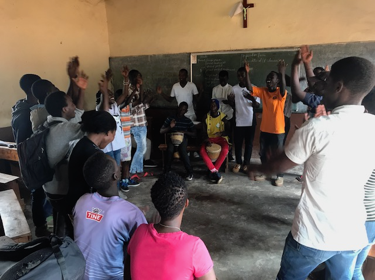
The afternoon Sunday support group at Qadaffi Mosque now includes children up to 14 years of age. As there have been no new HIV-infected children born to women in the clinic for the last decade, there are now only 52 children ages12 and under followed in the clinic (some have transferred in from other sites) with another 40 children under 14. This group enjoys a hip hop dance class, traditional dance, soccer, yoga and running games. Both groups conclude with a nutritious snack/meal. This week we also distributed school supplies for the new school year that begins January 22.
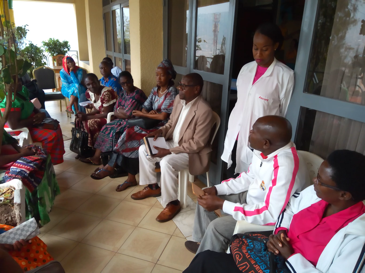
WE-ACTx for Hope (WFH), our official sister Rwandan organization has been awarded a new grant from the Rwanda CDC. It will support some clinical positions as well as 2 new programs: 1) over 40 peers identified by nursing staff will each help monitor and provide support for 45 patients quarterly under the supervision of the psychosocial team; 2) contact tracing of recent partners (over last year) of WFH patients. These initiatives will increase the work of all staff, but are welcome additions to assure retention in care and reduction of new infections. Pictured here is the first meeting of the peer patients.
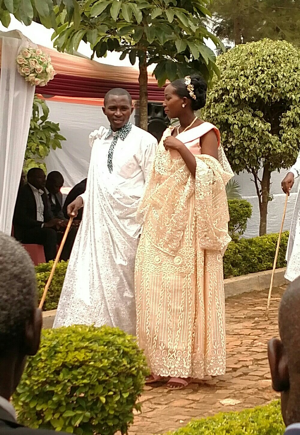
We were privileged to be invited attend the wedding of one of the KIP (youth adherence study) youth leaders Saturday morning. Rwandan weddings are big affairs. There are 3 parts, often held on different days. We attended the first part, called the “introduction.” The bride’s family (and friends) welcomes the groom’s family (and friends). Elder male members of the families represent the two sides. They banter with each other, to the amusement of the crowd, trying to get the upper hand on whether the groom meets the bride’s family’s standards to see if the family should agree to the marriage. They drink together several times and keep the crowd entertained. This is when the dowry is presented (previously the cow, now a check). Finally, the groom is introduced to the elders of the bride’s family and the bride appears and they sit together. Then the couple presents gifts to their family and special mentors. A Rwandan traditional buffet was served. The couple then left to prepare for the church wedding that afternoon and the reception that evening. Here are Nadine and Eric leaving the introduction ceremony.
A recent NPR story (https://www.npr.org/sections/goatsandsoda/2018/01/10/577018509/rwanda-ranks-in-the-top-5-for-gender-equity-do-its-teen-girls-agree) described the growth of a women’s debating team at Akilah Institute, which has a two-year accredited diploma program. Two youth leaders from WE-ACTx attend the school supported by scholarships and funding from our donors. The World Economic Forum’s Global Gender Gap Report now ranks Rwanda highly (4th in the world) because of government policies (women make up 60% of Parliament). Nonetheless, the story shares the voices of young women from the school discussing how gender roles are not equitable in daily life and how they are preparing to change this. It is always inspiring to hear how young people are engaged to keep moving things forward.
I guess we have finally “arrived” in Rwanda, as some of you may have noticed. The New York Times lists Kigali, Rwanda as one of the top 52 places to visit in 2018, and they just published 36 hours in Kigali (“a proud and progressive city that pulses with African charm” even as it tries to “reclaim its narrative 23 years after the horrific genocide”) (https://www.nytimes.com/interactive/2018/01/12/travel/what-to-do-36-hours-in-kigali-rwanda.html).
While they do mention as high points to visit in Kigali the Nyamirabo Women’s Center, an NGO sewing project combatting gender based violence, they should have also mentioned the WE-ACTx Clinic and Ineza, our amazing women’s income generation sewing cooperative.
It makes me feel good to know that your itinerary would include seeing first-hand the strong women who make the beautiful bags, place mats, and aprons that many of you have in your homes from your generation donations over the years.
Thanks so much for your support,
Mardge
.
http://www.we-actx.org/donations/
Dear friends and WE-ACTx supporters,
Last month, the New York Times ran a story on the “used clothes” conflict between the United States and East African countries including Rwanda. The title of the article was For Dignity and Development, East Africa Curbs Used Clothes Imports. The U.S. seeks to continue exporting second hand clothes (global wholesale used clothing trade is valued at ~$3.7 billion). But the Rwandan government cites the need to develop local manufacturing, which can’t compete with rock bottom prices from used clothing imports. The problem was exacerbated 20 years ago when debt crises, falling cotton prices and cheap Chinese imports, wiped out textile industries across Africa. The International Monetary Fund pushed African countries to open up trade, but the West protected its textile industries by restricting imports of yarns and fabrics from developing countries. Removing barriers to imports made clothing manufacturing in countries in Africa uncompetitive and almost disappear. The Rwandans also make the point that wearing discarded hand me down clothing from the west disrespects the dignity of its population. There are many more nuanced points to this discussion (not least of which is why do we buy and discard so much clothing in this country?). I bring this up in this end of year fundraising letter for WE-ACTx because it is a perfect starting point for reflecting on how we make donations and how we channel our charitable impulses in ways that are respectful and optimally constructive.
Thanks to your generosity last summer, in response to our appeal, WE-ACTx and WE-ACTx For Hope (WFH), our sister Rwandan organization, were able to maintain the children’s support groups and Ineza income generation activities this year, both essential programs providing psychosocial and economic support for patients with HIV in the clinic. Providing this kind of comprehensive care to young and adult patients is a hallmark of WE-ACTx’s work in Rwanda. Currently there are 2230 patients seen in the clinic in Kigali including 58 children £12 years, 400 youth between 13 and 24 years and ~1550 over 25 years. Per the Rwandan Ministry of Health protocol, almost all (2023/2230) are currently on antiretroviral therapy, with 80% having complete viral suppression. This remarkably high rate of viral suppression and healthy outcomes reflects the well-functioning caring staff, available medication, patients trusting their providers, and a comprehensive array of services which address nutritional, psychosocial, and medical needs, income supplements, educational opportunities and community stigma that comprise the WE-ACTx for Hope program.
Over the last 5 years, we’ve written to you about a special group of young people who are part of the staff of WE-ACTx for Hope staff– the 18 youth leaders who conducted the intervention to improve adherence to HIV medications in youngsters with HIV. As the study draws to a close it’s telling to look at how much these youth taught us and how much they accomplished. In addition to dealing well with their own HIV infection, becoming skilled at delivering the cognitive behavioral therapy intervention and being role models for the younger patients, they succeeded in other aspects of their lives as well. Five of the 18 completed university studies, 2 are still studying at the university and 2 completed high school during the past 5 years. Six have jobs outside of their work related to WE-ACTx. Four of the students were married recently and 2 have children. Many of the youth leaders acknowledge that the confidence with which they approach these endeavors stems from lessons on coping strategies and healthy choices they learned about during the research program. We are so proud of their hard work and tremendous growth and hope their success continues.
Programmatically, WE-ACTx for Hope has continued to diversify and seek new funding to support the clinical program and its related activities, with backing from the Rwandan public health system. Other funders include the Rwandan CDC, Keep a Child Alive, AIDS Healthcare Foundation. And this month Chantal and Bosco (the leadership team) are working on a submission to the Global Fund to provide additional support for women and girls with and at risk for HIV.
WE-ACTx has always had a tradition of taking its direction from local Rwandan women’s groups. WE-ACTx for Hope continues this tradition as it carries out the work in Rwanda. Our support for WE-ACTx for Hope on their terms is so important because it represents our trust and solidarity for goals that we all share – addressing needs as they arise and building a more just and equitable world.
We are excited to tell you that one of our generous donors, the Robert F. Meagher Charitable Foundation and members of the Board of WE-ACTx have joined together to create this year’s matching fund for donations up to $40,000. So please make your respectful donations to an organization that appreciates your support and directs the funds where they are needed. Thank you so much.
Toward a healthy and peaceful world,
Mardge Cohen
Medical Director, WE-ACTx
Please make your tax-deductible donation here:
http://www.we-actx.org/donations/
Thank you so much for your continued support
February 4, 2017
Dear friends
Like many of you, I joined in the Women’s March on January 21. The next day, I left Washington DC for Kigali. It has been difficult to keep up with each terrible assault/insult and the powerful resistance, but it’s almost impossible not to think about it all the time. Our Rwandan friends ask what happened to the United States? Some are surprised there can be such vocal opposition to a President. Others say they realize how much this affects them, and the whole world, and are terrified.
At WE-ACTx for Hope, the clinic continues to successfully serve 2000 patients and their families. Since January 1, the staff has been implementing the 3 month care visit for those with viral suppression. Previously the Rwandan national protocol required monthly clinic visits and medication refills. Now, about 2/3 of all adult WE-ACTx For Hope patients (plans for children and youth are underway) who meet the viral suppression criteria will attend clinic visits and receive antiretroviral medications every 3 months. Patients participate in a group educational meeting as well as individual sessions with counselors to learn about the new program and reinforce adherence for this longer duration between appointments. These extra sessions during clinic hours make the clinic day very busy, but by April, the number of patients attending clinic each day will be reduced, allowing us to spend more time with those who have not achieved viral suppression and need more attention. Our team of nurses, physician, lab technicians, receptionists and data managers are excited to meet this new challenge (as well as the progress it represents). Patients share that they are thrilled- they feel like they succeeded and graduated to a new level of care. One patient did ask if this meant they would only have to take one special pill every 3 months. If only!
WE-ACTx for Hope just received additional funding from AIDS Health Care Foundation. This supports a renewed prevention effort to enroll 20 new patients each month. A team goes out from the clinic to high seroprevalence areas in Kigali to educate, counsel and provide HIV rapid testing. In addition, a new effort to reach and provide counseling and testing for sex workers is underway at the clinic. A survey of 65 sex workers attending the clinic showed that these patients had the same rate of viral suppression as the rest of the clinic population. Those sex workers who are not virally suppressed will now meet regularly to support each other to improve adherence and follow safer sex guidelines. We will encourage these women to bring in other friends and coworkers for testing as this is a high risk group in Kigali. In addition, parents in the clinic who have uninfected children over 16 have asked staff to help them discuss safer sex and HIV prevention with these children. The counselors will be setting up youth-oriented workshops to provide this education and then offer counseling and testing for HIV. Implementing these new prevention efforts will help contribute to the national plan to prevent HIV transmission and allow WE-ACTx for Hope continue its leadership role in HIV prevention and care for women and children.
The S support groups have been reorganized to reflect the changing numbers and need of younger patients with HIV as well as available resources. Transportation costs have greatly increased in the city. This year, we will reduce group support sessions from 3 to 2 sessions (the first and third Sundays of each month) in order to have sufficient transport money for all children to attend. Quarterly parent group meetings will continue. In the morning, 100 older youth, aged 16-18, meet at St Famille school and have music, dance, yoga and group discussions with peer parents. Concentrating on this older group will allow peer parents to discuss gender role, HIV, school, and family issues.
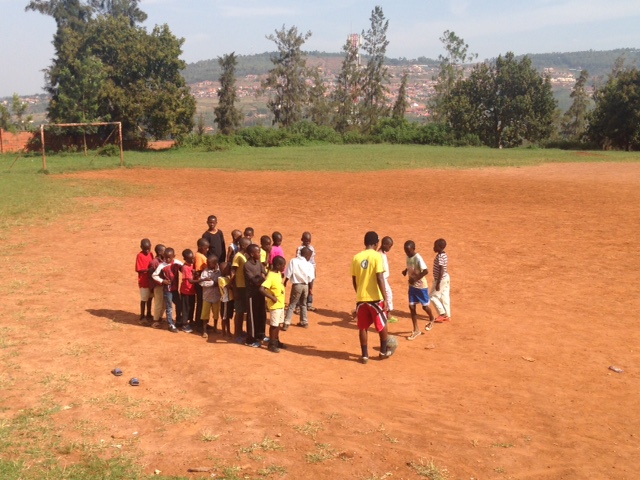
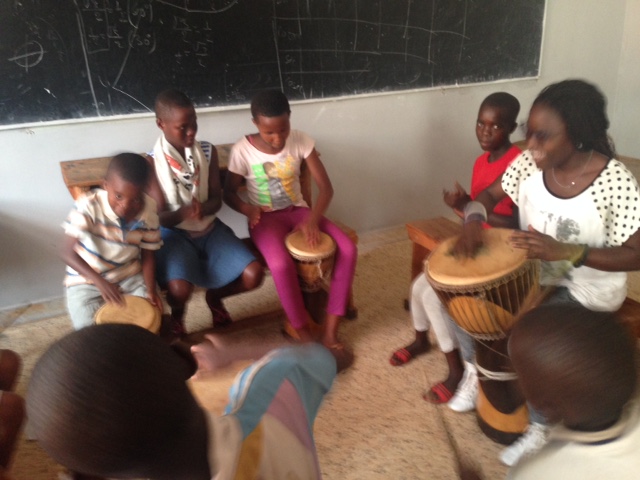
They will also be able to learn about and discuss the logistics of new 3 month appointment schedule which will begin for children and youth later this year. About 100 WE-ACTx for Hope children between 7 and 15 years come to the afternoon group, held at Qadaffi Mosque for the past xx years. Those under 13 have yoga, drumming, traditional dance, modern dance, games, and soccer. The 13-15 year olds have more grown up discussions about health, school, and family. More peer parents will lead groups for the younger ones, so that more age appropriate attention will be provided. The peer parents lead the activities and their energy and enthusiasm carries the day.
Our yoga teacher is named Joseph. He began as a patient in WE-ACTx 12 years ago when he was 18 years old. In 2010, he completed secondary school and became interested in the yoga program. He sought more training and Deidre Summerbell, who runs Project Air helped him develop the discipline and provided the training for him to reach teacher status. Generous donors from Chicago supported these efforts over several years. Joseph’s physical appearance, demeanor, and approach to life are so beautiful, well-balanced, and mature that he inspires and models health for all of us.
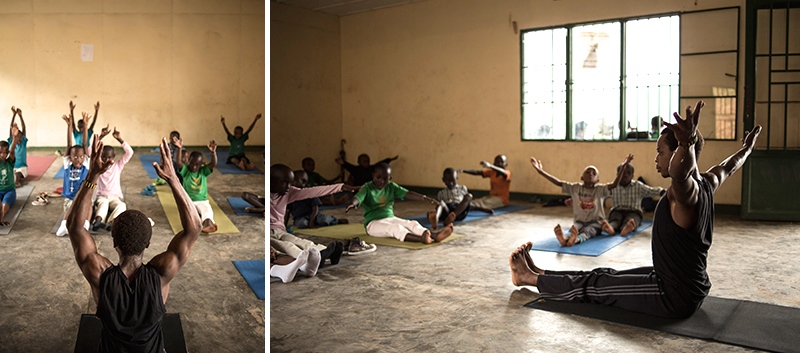
Today Joseph is earning a living for himself and his family. He teaches 3 yoga groups for non-Rwandan residents in different Kigali neighborhoods, and to both children support groups. He is optimistic that he will continue to be healthy and have rewarding work. This is one of WE-ACTx’s many success stories – and most importantly so many contributed to help make this happen.
This trip was filled with several success stories of young people completing university studies, attaining jobs, and getting married. I hope to share these details with you in future letters, as your support has been so crucial.
Thank you,
Mardge
Mardge Cohen MD
PI, Women Interagency HIV Study (WIHS)
Medical Director, Women’s Equity in Access to Care and Treatment (WE-ACTx)
Boston Health Care for the Homeless Program
July 30, 2016
I am once again privileged and moved to offer you summer greetings from Kigali. WE-ACTx has now been working here for 13 years, with the work officially led by our local partner WE-ACTx For Hope (WFH) for the past 7.
To get a good feel for our program view this PBS Newshour segment on how Rwanda has responded to the HIV epidemic entitled:
How Rwanda, once torn by genocide, became a global anti-AIDS leader
Our colleague Dr. Sabin, head of the Rwandan Biomedical Center (RBC), told us that when he was approached by PBS to highlight challenges and successes in HIV care in Rwanda, he immediately thought of a rural perinatal reduction campaign and the youth work of WE-ACTx. In less than 10 minutes you can be transported here to get the flavor of the faces, the successes, the future challenges, and most importantly the special young people working on the epidemic here. Although WE-ACTx is not mentioned by name in the video, you can see several of our programs, especially addressing challenges such as youth adherence and even see the library with giraffes on the wall painted years back by our artist friends and visitors from Chicago.
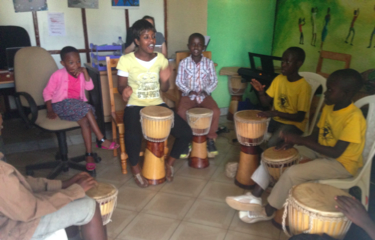
Services that engage youth in meaningful and friendly ways continue to be a centerpiece of our program. Below a Musicians without Borders trained peer parent leads a drumming session with children who have come for their clinic appointments. The beat travels from the downstairs music room throughout the morning on Wednesday children’s clinic day, pleasing many more than those drumming. I get introduced to new types of music, inspiring ideas for the annual “Gordy and Mardge” music CD mix we love sharing with many of you each year.
Summer camp has been a WE-ACTx tradition since 2009, when 3 Boston young advocates (Gia, Chloe and Dan) raised funds from friends and families to start the project. Rwandan youth coordinators now prepare and lead the entire process. For the past 7 years, Chicago’s Latin High School, under Ingrid Dorer Fitzpatrick’s creative and persistent leadership has provided major support the camp both financially and through volunteers. Each summer, 4-8 Latin high school students travel to Kigali and join Rwandan peer parents as co-counselors for a 2-week day camp experience for our young patients, aged 11-14.
The campers play, dance, draw, sing, do yoga exercises, have a large lunch and thoroughly enjoy themselves. They prepare a closing ceremony with performances for the families of the campers. All smiles and happy times for everyone. And the bonding among the Rwandan and U.S. counselors is a special highlight; the relationships continue with Facebook and texting after the students return home. Many of the Latin students have returned for a second trip, solidifying the bonds even more and proving that “being there” is really what matters. This inspiring collaboration has been so important for the youngsters served by WE-ACTx, and the growth of the counselors from both countries.
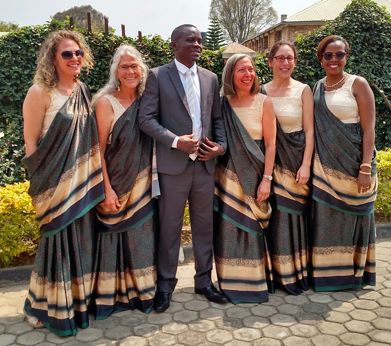
Our NIH funded research, the Kigali Imbereheza Project (KIP), devoted to improving adherence in youth with HIV aged 14-21 has completed all 9 “waves” of intervention. This remarkably successful project will now move into the final phases of collecting assessments from the participants over the next year and begin to formally analyze the results of this randomized controlled trial that we are conducting in collaboration with Hektoen, the University of Illinois, and the Rwandan Biomedical Center. One reason the study has gone so well has been the hard work and amazing leadership of the KIP study project director Charles Ingabire. So you can imagine how special it was that we were able to attend his wedding during this visit. Pictured here is Charles, along with Peace Corp Volunteer Cari, Mary, me, Geri, and Josette from the KIP project in traditional Rwandan dresses at the wedding.
Summer interns (Rush medical student Stephanie Ross and college student Lizzy Hilt) worked on helping us better understand ways stigma affects youth in our clinic, especially those in boarding schools. In order to protect their confidentiality youngsters attending public boarding schools (about 25% of Rwandan students) have to hide their antiretroviral medications and often skip doses or stop taking their pills. This may in part explain the lower rates of viral suppression among these younger patients (only 70% among those aged 13-24 compared to 84% for the entire clinic population). While we are hopeful that we will see improvement through our KIP study, we realize that broader advocacy efforts, including working with the Ministries of Health, Youth and Education will be needed to meet this country wide challenge.
I was personally saddened to learn that one of our dear patients who has been with WE-ACTx since the beginning and is also now a close friend, was diagnosed with cervical cancer. She had sought care herself in Uganda and received some radiation, but has now learned from a CT scan in Kigali that the cancer has spread. She needs additional palliative radiation. Patients in Rwanda are sent to Uganda for this; but the machine in Uganda is currently broken. Expected to be fixed in a month or so, Rwandan doctors will then send 2-3 persons a month with cervical cancer to the Ugandan program. Sadly, there are more than 200 women on the waiting list for radiation in Rwanda. Where you are born and live still determines how you will fare with this cancer, the major cause of death from cancer among women in Africa. Even with the potential of vaccines, early screening and treatment, many women here are still left behind, many with treatable complications. We are hoping to raise the funds to help fast track the needed radiation for this special patient. Cervical cancer was already one of WE-ACTx’s priority areas. We screen many women in WE-ACTx for cervical cancer and hope we and others in Rwanda can have a more positive impact on this important public health concern.
On a brighter note related to public health challenges, the Rwandan Biomedical Center under Dr. Sabin and others, has negotiated with donors and several drug companies to provide treatment of Hepatitis C at a cost of $800/patient, far below U.S. costs. Government supported treatment will be available to those diagnosed with Hepatitis C at public and private clinics. Hepatitis C rates in Rwanda are not known, but is estimated at about 4%. Globally, people with hepatitis C and their allies from have protested the outrageous price of lifesaving HCV medicines and the greed of the industry. They are pushing for generic competition to bring down the price of HCV treatment and ensure universal access. While walking to the clinic one morning this week, I saw this queue. By the end of that one day, 2600 people had been tested for Hepatitis B and C and had received their first Hepatitis B vaccine!

Looking back over the past decade of work with WE-ACTx, I am still without words to fully describe all the successes, challenges and failures of an under-resourced health care system and what a difference a well run clinic committed to comprehensive, integrated medical and psychosocial care for women, men and children with HIV has made. Small victories, sad losses, continued hard work and a long road ahead. Thank you for your continued support as always for the staff and patients here.
Salud,
Mardge
Dear friends
Thank you so much for your generous response to WE-ACTx’s annual appeal. Your support helps continue the high quality and innovative programs of WE-ACTx For Hope (WFH), our Rwandan partner. Without your support, little of the good work and exciting progress described below could continue. Thus as I begin another new year in Kigali, I am so grateful to be able to share some news and personal reflections about the growth and strength of WFH.
Rwanda now has 70,000 people fleeing from the conflict in Burundi within its borders, most residing in refugee camps. WFH’s Youth Music Leaders (young patients with HIV who have graduated from our peer parent program who were then trained by our partner Musicians without Borders) are currently working in the Mahama Refugee Camp. Mahama is in the eastern province of Rwanda near the border with Tanzania. Musicians without Borders supports six of our Youth Music Leaders to travel to the camps and train groups of 30 young Burundi refugee community leaders who then in turn support hundreds of younger children in Mahama through music. During breaks in the training sessions, the Youth Music Leaders heard stories of loss, loneliness and fear from the Burundi young people. Many of those being trained were sent to Rwanda by their parents who feared for their safety s youth are being targeted. Others had recently seen one of their parents killed and are grieving. It is very intense as this displacement is overwhelming and reminiscent of the history of Rwanda and their own families’ stories. But the Youth Music Leaders also reported that the young refugees share how happy they feel while making music and how the music frees them, even for a short time, from their sadness and fear. Your donations and support for WE-ACTx’s youth program over the years have helped to make this possible. According to a recent report from United Nations High Commissioner for Refugees, violence around the globe has forced almost 60 million people from there homes, living as refugees or internally displaced people, the highest number since WWII. With so many people living as a refugees or internally displaced persons, it’s pretty amazing that youngsters from WE-ACTx are now part of making a difference in this disastrous global problem.
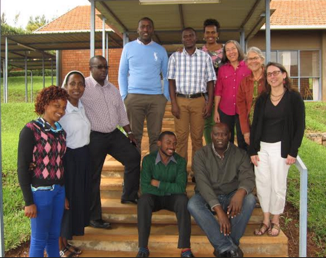
I participated in our Youth Research Program Team 3 day workshop. We are in the fourth year of the 5 year NIH grant I described in past letters to improve adolescent adherence to antiretroviral therapy. This past week, we previewed some of the study’s data and preliminary analyses of the first 200 participants (we will finish enrollment in August 2016). Our team collaboratively wrote 6 abstracts for submission to the International AIDS Conference that will be held in Durban, South Africa in mid July 2016. Our submissions report on multiple accomplishments: better immune status at 6 months, reducing gender based violence to improve adherence, how the intervention increased caregivers HIV knowledge and reduced stigma, the effectiveness of our training approach, how the intervention reduced risky behaviors at 6 months, and mental health changes at 6 months. We are hopeful that some of these abstracts will be accepted for oral or poster presentations in Durban.
Our staff has completed the formal Family Assessment of more than 270 families with children 18 and younger followed in the clinic, and we have starting examining the results. All of the families were found to be in the lowest income levels (as we expected); but over a third report their child eats only one meal a day and is unable to pay their school fees. Over a quarter have lost at least one parent, and 15% are orphans. We looked at the relationship of these and other psychosocial variables to viral suppression (the best objective outcome to measure successful treatment for those infected with HIV). We found that a child with one parent was more than twice as likely to be virally suppressed than an orphan. In addition if the child’s caregiver reported the child experienced stigma about having HIV or reported sometimes getting so angry they physically hurt the child, the child was significantly less likely to be virally suppressed. Fortunately, the younger children are less likely to be orphans, as their parents are doing well on medications now and living longer. We are working with the staff and patients to design and implement interventions to address stigma, anger and abuse for these children aimed at improving their health outcomes and lives.
The Children Support Groups continue to mature. About 120 older youth, (ages 14-22 ) come to St Famille every Sunday morning to play music and perform traditional dance and then discuss various topics. Some of the older youth have now been trained by the peer parents to facilitate discussions among their peers. Topics include disclosure of HIV status, taking antiretroviral medication at boarding school, and reproductive health. The younger children (6-13years) are still gathering at the Qadaffi Mosque site each Sunday afternoon, coming together for play, a nutritious snack and an opportunity for traditional dance, yoga, or modern/hiphop dance. Amazingly, there are now no children younger than 6 in our program–perinatal transmission has been successfully prevented in all pregnant women in our program since 2009. One newsworthy event is that a member of the girl’s national football (soccer) team who has recently become a patient in WFH clinic has volunteered to coach a WFH girl’s team (10-13 year olds). Any extra team shirts out there for the girls’ team?
Of course, financial sustainability is a giant issue for WE-ACTx and WFH. Although several of our recent applications for funding have not been successful (WFH did not receive global fund support that we were hoping to obtain), we are thrilled that 3 new donors have recently begun to support the work. UNAIDS, dotHIV (German organization), and AIDS Healthcare Foundation (AHF). These new donors are contributing to WFH and are supporting prevention outreach programs, SOSOMA nutrition program and some clinic staff and operational costs over the next year and hopefully in years to come. Efforts to more fully integrate into the public health system are also continuing. Having these strong donors and collaborations makes WE-ACTx’s contribution even more important as together they ensure the stability of WFH and it’s good work. One behalf of the 2500 patients we have served and the 40 Rwanda staff at our 2 clinics, we thank you.
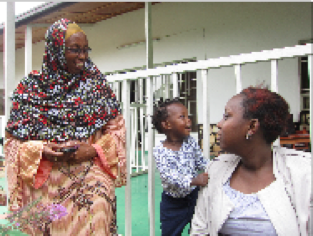
Finally, this is my good friend Naila (on the left), whom some of you met when she was in Chicago a decade ago with her daughter Nadia and granddaughter Malka visiting our house in Kigali. It is so nice to see them together, enjoying life and looking so healthy. Naila has been a peer advocate at WE-ACTx for many years and was one of the first patients in Kigali to start on third line therapy. I love pictures of 3 generations and hope you do as well.
Thank you for your continued support for WE-ACTx,
Mardge
www.we-actx.org
Dear all
The rainy season has ended in Kigali and the weather is dry and warm. Many colleagues here have friends and neighbors who are housing those who’ve come from Burundi. Thousands from Burundi also live in terrible conditions in camps 2 hours from Kigali. Travel and business has been disrupted between the two countries. It’s unsettling politically as well for Rwandans, as President Kagame has come out against the Burundi President remaining in office. At the same time there are pressures to change the constitution here in Rwanda for Kagame to remain after his term ends in 2017.
I want to thank those who have already responded to the recent WE-ACTx mailing and donated to our “Spring to Successful Schooling Campaign.” WE-ACTx clinic staff have been busy assessing children and families to best direct our resources to most effectively address their problems. We have learned much from these assessments about the challenges facing children and their families. Many young patients have had interruptions in their schooling (because of being ill, not having school fees, or various parental difficulties) and are therefore uncomfortably much older than other students in their grades. Others are unable to receive their grades and report cards simply because they cannot present their school fees. A significant number (nearly 20%) of those who are mothers report they trade sex for money in order to feed their families. And housing continues to be a problem for many families.
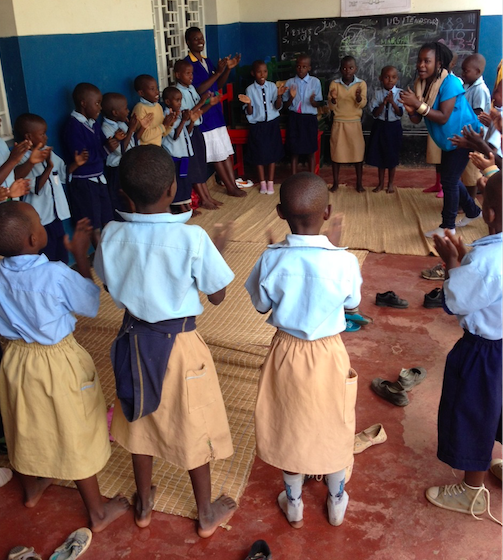
We have learned that it is particularly important and rewarding to support those in school with disabilities, as well as encourage young women and men to try to go to vocational schools and the university. Our collaboration with Musicians Without Borders has resulted in trained Youth Music Leaders who lead all of the children’s activities in WE-ACTx and annual summer camp. In the last few months these Music Leaders have also been hired at nursery schools, church programs, and schools. These new jobs will make a big difference in their lives and those of the young children they will teach. Below, animated Leontine leads the young school children in singing and clapping.
Our clinic is continuing its efforts to improve adherence to antiretroviral medication so that our patients will have viral suppression (undetectable viral load by laboratory tests) and live long and healthy lives. Wonderfully, 90% of patients in WE-ACTx over 30 who are on antiretroviral medications have viral loads that are undetectable! Unfortunately, younger patients are not doing as well– only 75% have undetectable viral load levels. Many of these younger patients were born with HIV and thus have had the disease much longer, and have had longer periods without effective medications. They have more resistant virus and need more attention and better therapeutic options, some of which are becoming available here in Kigali.
We have also analyzed the new patients coming into WE-ACTx in the past 2 years. Of 100 patients without any previous care, 1 in 5 have a diagnosis of full blown AIDS with low CD4 < 200 (marker of advanced disease). More efforts are needed to bring people into care earlier. Many of you may have seen the publicity about the recently stopped large global study showing that earlier start of treatment results in longer and healthier lives for people with HIV.
WE-ACTx For Hope (the local organization who now owns and runs the clinic) has been recognized as a program which delivers high quality care in Rwanda. The Minister of Health/Rwanda CDC has just allocated funds to support several nurse, lab and data manager positions this year (and hopefully these will continue) in acknowledgement of this work. This support increases the stability and sustainability of the clinic in Kigali and speaks to the importance of local governance and responsibility.
Summer always brings interns and new projects to WE-ACTx. The income generation programs are gaining traction with help from our partner Manos de Madres newly hired staff and an intern from Tufts Fletcher graduate program. Also this month, a graduate student in psychology from Boston University is working with the KIP research team to learn about coping strategies of HIV infected older youth. Two college students are joining soon and will help staff work on clinic programs, the summer camp, and educational efforts.
I was lucky to be in Kigali this year again for the WE-ACTx celebration of Day of the African Child. The day is a giant party for children who are patients at the clinic and their families. Over 1200 people came, played, enjoyed the park, watched wonderful dancing, singing, drumming, and theatre, organized by the peer parents and youth leaders and ate a big buffet lunch.
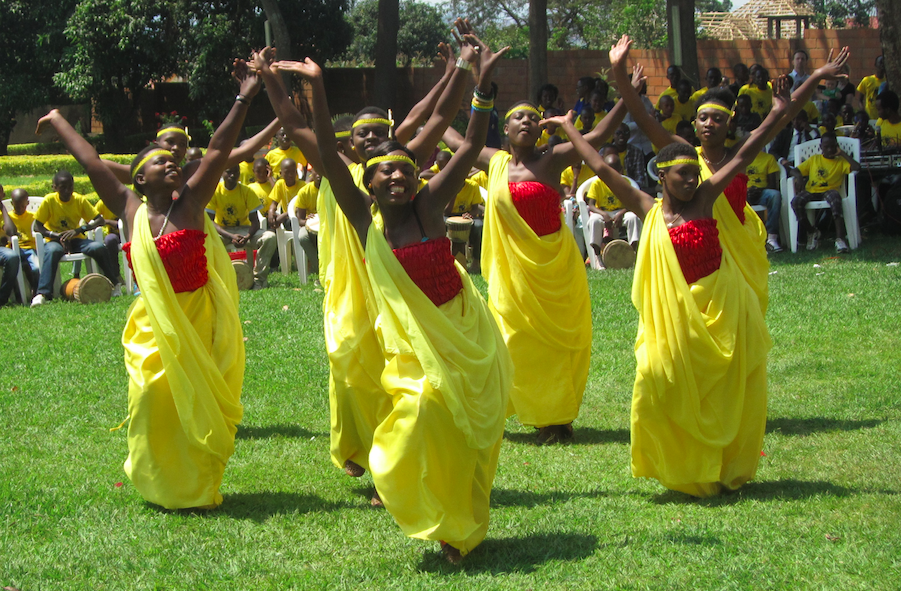
It was truly beautiful to see so many healthy and talented young people. Representatives of the WE-ACTx Board, the Rwandan Biomedical Center of the Ministry of Health, and other visitors joined in the festivities and were overcome by the enthusiasm, strength and joy of the youngsters.
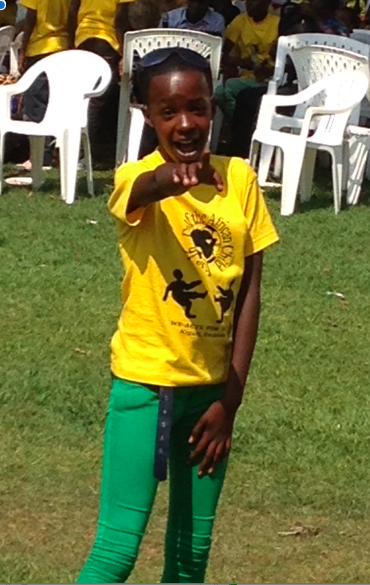
I wish you all could have also enjoyed watching the youth perform traditional dance, modern dance, hip hop, and sing together. We have seen these youngsters grow up over 10 years and continue to be amazed at how strong, creative, and hopeful they are. Thanks for your support in keeping WE-ACTx going.
In appreciation,
Mardge
www.we-actx.org
Writer Ken Carlton created a lovely photo essay to tell the story of WE-ACTx. If you’d like to read it and see the pictures, his blog is found at this address:
http://kencarlton.net/ramenblog/2015/2/21/can-anyone-really-make-a-difference
2/2/15 Heroes and Schools
Dear friends
Today is the celebration of Heroes Day in Kigali, a national holiday every February 1st, to honor heroic actions of those who died for Rwanda during the genocide. The WE-ACTx For Hope clinic is closed, as are all schools and most businesses, so I am able to pause and share my thoughts and updates below. There are local memorials and gatherings held throughout the country which commemorates heroic acts such as those by the students at Nyange Secondary School who during the Rwandan genocide refused to identify the Tutsi students, and as a result of this courageous act were all killed by the rebels.
This is the first year there wasn’t a national ceremony at the stadium; instead there is a Heroes Day tennis tournament underway, which some of our friends went to yesterday, along with a national Heroes Day hoops tournament (basketball). Although many of you know I am not a big sports fan, there is something very healing about recreation taking the place of massacres and memorials as the pre-occupation of the day.
In Rwanda, the extended school vacation now runs through November and December, ending later than usual this year, with the school year restarting on January 26. Like in September in the states, school supplies are bought, school uniforms fitted, and families prepare their students to start schools. However, while most youngsters attend primary school, fewer go on to secondary school. Publicly funded secondary school is more costly and tracked. Only those who score highest can go to the better schools, including boarding schools; others who do well can attend second tier schools (these cost about $200/term including uniforms and materials). For those with lower scores or who can’t afford these secondary school fees, there are less expensive and lower quality “9 year” and “12 year” schools. Private academic and vocational schools are even more expensive.
As the young patients in WE-ACTx For Hope (FH)clinic continue to do well and feel stronger physically, more want to attend secondary school, as do those older youth who never completed their schooling when they were younger. So every year we face the annual dilemma of how to respond when these students come to the clinic asking us to help pay their school fees. While WE-ACTx FH does support students in a variety of ways, we no longer have any specific grant for school fees. We are hoping to change this. WE-ACTx FH has applied (and hopefully will hear in the next month) to be included in a country-wide program to help support school fees for vulnerable children. It seems tragic to waste the talents and learning lives of these precious children for lack of these low-for-us, but too-high-for-them fees. Of course this year, we again dipped into our own pockets and the clinics’ stretched budget to support those who came asking for school fees last week in order to start the school term.
This month, the WE-ACTx FH staff was very discouraged when we learned that two 14 year old girls attending the clinic were pregnant. One described her relationship with her boyfriend, which began when she was 11 and he was 17. When she told him she was pregnant, after the clinic nurse took a pregnancy test, he moved away and is no longer reachable. The other girl lives with a guardian, as her parents died. She reported having sex with a 20 year old neighbor who bought her things, and then with his older brother, who didn’t use condoms. Neither of these 2 girls realized they were pregnant. Now both are prohibited from attending school until after the babies are born. In Rwanda it is illegal to give contraception to girls under 18, though education about reproductive health is now allowed. We are working with the WE-ACTx FH staff to determine if any red flags were not recognized in these young girls, and whether they can be more alert to warning signs in other young patients. Increased efforts towards small group discussions of reproductive health issues and ways to promote respectful and responsible male behavior are underway.
On a more uplifting note, the number of patients on antiretroviral therapy at the WE-ACTx Clinic has increased as Rwanda has started following WHO guidelines to treat people with HIV with CD4 cells < 500 (previously patients had to have CD4 cells < 350 to qualify for treatment). Currently 2069 of the 2400 patients followed by WE-ACTx FH are on antiretroviral medications. And a remarkable 84 % of these patients have undetectable viral loads. This high number of patients with viral suppression speaks to excellent adherence by those attending the clinic, a testament to both staff and patient efforts. Older patients have the best adherence, with almost all those over 55 having fully suppressed viral loads. Younger patients including those born with HIV who have been infected for a long time tend to have higher rates of unsuppressed virus. We continue to use a Direct Observation Therapy (DOT) strategy for those with the most advanced disease progression to promote adherence.
We are excited to have just hired a new full time Rwandan physician who is both a wonderful clinician as well as someone with the skills and interest to help us monitor quality and develop new programs as needed.
Finally, I want to let you know how Pretty is doing. I’ve written about her previously as a bright young teenager who unfortunately had a stroke when she was 16 (from vasculitis secondary to her HIV) which left her unable to speak or use her dominant right hand (see the photo of her working with our music therapist Chris in my January 2014 letter from Kigali archived at www.we-actx.org). Finding a school for her has been very challenging. She was told by her previous boarding school, where until she had the stroke, was one of the top students, that she could not return because she had lost the ability to speak and couldn’t independently take care of herself. Pretty’s mother and staff at WE-ACTx have spent 2 years trying to find a school in Rwanda which would accept her. After first being rejected, she is now enrolled in Senior 4 (similar to 10th grade) at Gatagara Secondary School, the only high school for physically disabled students in Rwanda. It has 400 students, including some who are hearing impaired and some using wheelchairs. The school is located in Butare, a 2 ½ hour car ride from Kigali Last week I visited the school with Henriette, WE-ACTx FH Youth Director, who has been assisting Pretty and her mother. Pretty was happy and well integrated into the program; she has many friends. We watched her perform in the classroom and her daily regimen with the physical therapist.
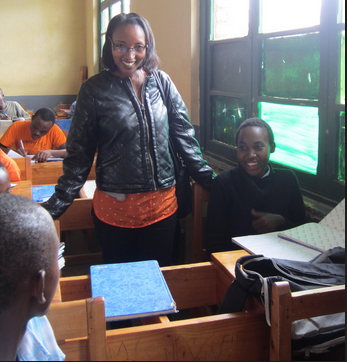
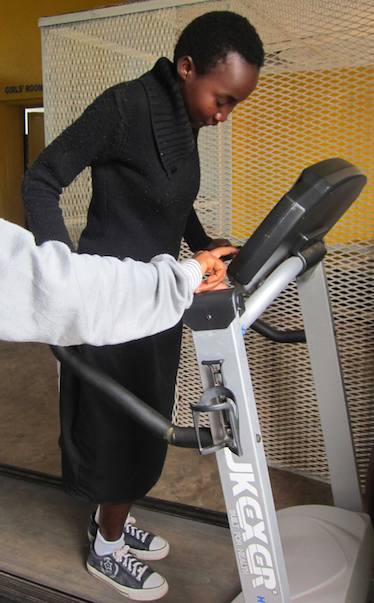
school is well organized with about 50 students in each classroom. There is a chemistry and physics laboratory. The students eat together, live in dormitories and have a structured schedule that Pretty really enjoys. One of WE-ACTx’s good friends Christine Curci who has been in Rwanda for a couple of months each of the past few years will be returning and is bringing Pretty a lap top to help her with tests and papers as writing with her left hand is still very difficult. WE-ACTx FH will use a portion of the money raised last year from the generous donations you all made in honor of my 2 children’s weddings to pay the full 3 years of boarding school fees for Pretty.
As of mid January, we have completed half of the enrollment for the NIH-Funded Youth Adherence Study. Retention for the 6 month assessment is phenomenal (only 1 of the 159 youth enrolled did not come to the study visit, and since returning to the clinic, she has is scheduled for the twelve month assessment). The retention rate is 99.4%.

Here is the youth leader team enjoying their success.
Many of you have received (in the mail or in person) the “Mardge and Gordy 2014 Favorites” annual music mix CD which this year featured pictures, and even a few songs, from WE-ACTx and Rwanda (cover pictured below). If you didn’t, but wish to get a copy, please let us know your snail mail and we would be happy to send one as a thank-you and way of sharing our joy for being able to continue to do this work here in Rwanda.
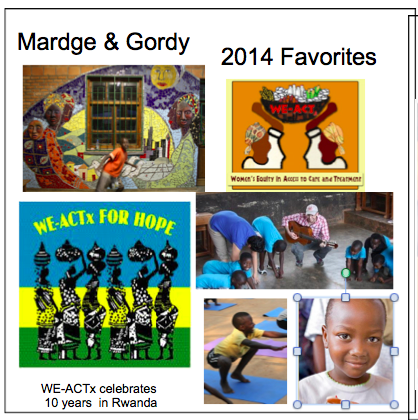
Mardge
www.we-actx.org
December 1, 2014
Dear Friends,
This year WE-ACTx celebrates 10 years of high quality, comprehensive and innovative care for women and children with HIV, and their families. Hundreds of supporters in Kigali in June, Chicago in October, and Boston in November joined together to acknowledge this anniversary and a decade of accomplishments made possible in large part by your consistent and dedicated support.
WE-ACTx has not only proven itself to be long lasting and sustainable, it has continually responded to the changing needs of 3000 patients by listening and responding to the patients and their advocates. With your help, WE-ACTx survived and grew over the past decade and:
- provided urgently needed HIV detection by voluntary counseling and testing (2004)
- evaluated and quickly started nearly 2000 women on antiretroviral medications (2005)
- prioritized securing food for those who had none and became hungry as a result of their appetite returning once feeling better after starting their medications (2005)
- initiated program for testing and care for children (2006)
- began patient-staffed income generation programs (2006)
- sponsored an individual and group counseling program to address mental health concerns, stigma, and violence (2007)
- supported weekly Sunday children’s groups for hundreds of youth with HIV (2007)
- sponsored first summer camp for children (2008)
- initiated peer parent youth leadership program (2009)
- added comprehensive contraceptive services to primary HIV care (2010)
- supported expanded income generation programs (2011)
- brought music therapy (in collaboration with Musicians without Borders) to women and youth and used direct observation therapy to increase adherence to antiretroviral medications (2012)
- began NIH -funded study to increase adherence to antiretroviral medications in Rwandan youth (2013)
- graduated young mothers from a literacy program (2014)
Currently, 45 Rwandese staff the two clinics and ancillary programs managed by WE-ACTx For Hope, our sister organization which is fully responsible for all activities in Kigali. They work closely with the Rwandan public health department and other grass roots organizations to deliver the most comprehensive HIV care in the country.
WE-ACTx has been especially lucky this year. Over $32,000 has been raised in honor of the marriages of my children, Davida (to Sim) and Eugene (to Hima). We thank family and friends for this show of love and support for those in need in Kigali. The funds will be dedicated to support 1) a more comprehensive music therapy program, including individual therapy for disabled youth and non-adherent youth, twice monthly therapy for the Young Mother’s Group, and efforts to employ young adult patients who have been trained as music youth leaders and 2) school fees for disabled infected patients requiring private facilities. These special projects would not have been initiated without the influx of these donations.
We are also delighted to tell you that an anonymous donor has pledged to match up to $50,000 raised from this end of year appeal in honor of WE-ACTx’s 10 years. We need your continued generosity to maintain all of our programs and address new challenges faced by the women and children and their families we serve.
Thank you so much for your ongoing support.
With gratitude,
Mardge Cohen
Medical Director, WE-ACTx
Help us reach our end of year matching pledge by donating
on line before December 31st at www.we-actx.org or mail check to
WE-ACTx
584 Castro St. #416
San Francisco, CA 94114
The 2014 10 year WE-ACTx Chicago celebration was an evening of good feelings, friendships, and succesful fundraising. Many thanks to all those who organized and joined us to suport WE-ACTx. More than $42,000 was raised through tickets, donations, on line and silent auctions, and the Fund a Need Auction .
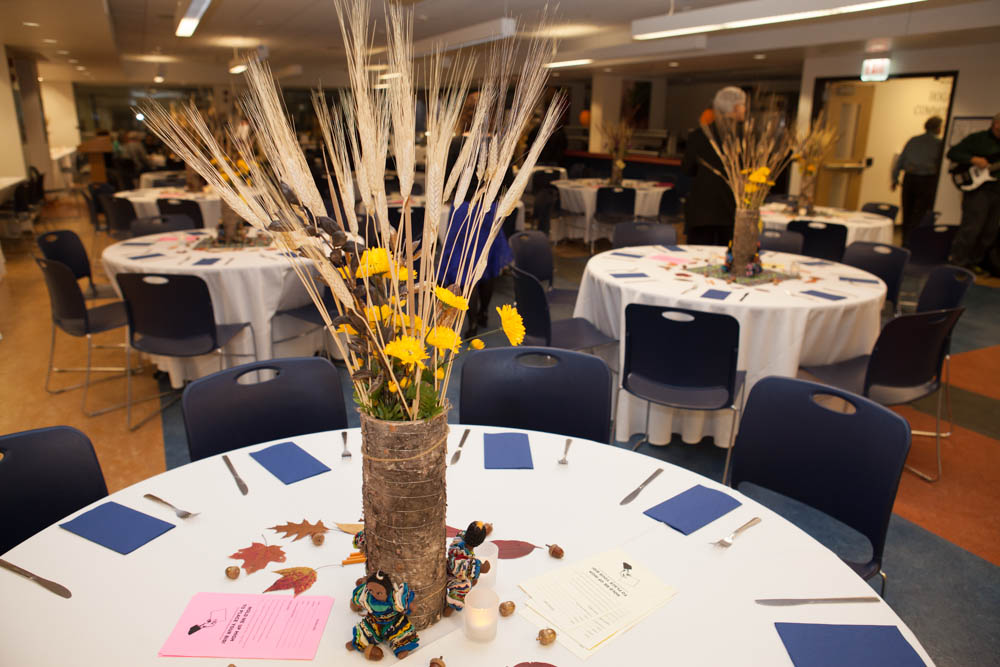
The Latin School hosted the dinner event for the second year in a row. Many thanks to Ingrid Dorer-Fitzpatrick and the Latin school and catering staff for making the evening flow so well.
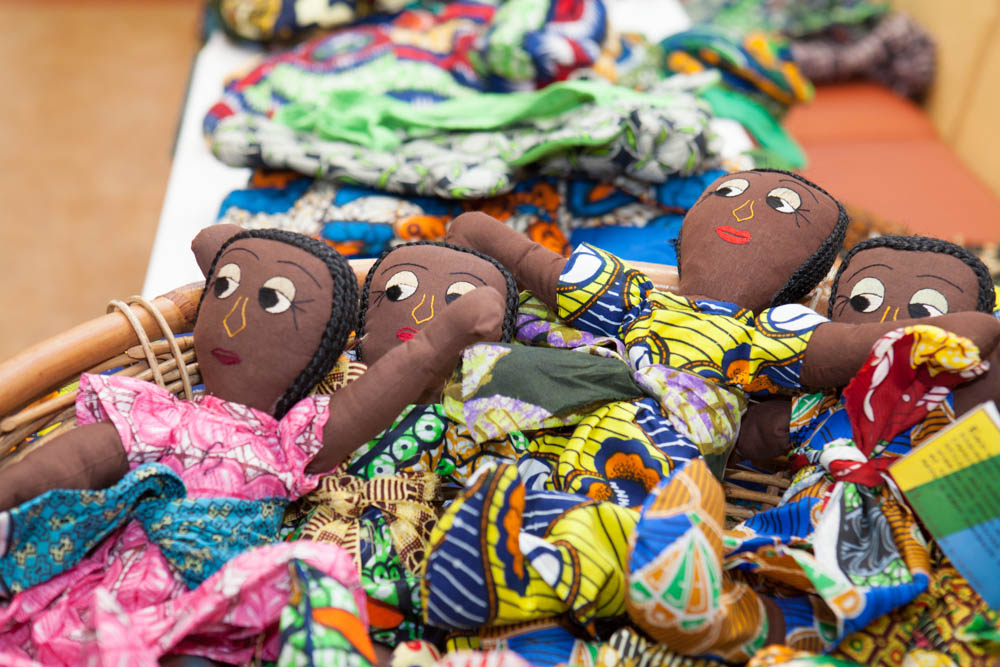
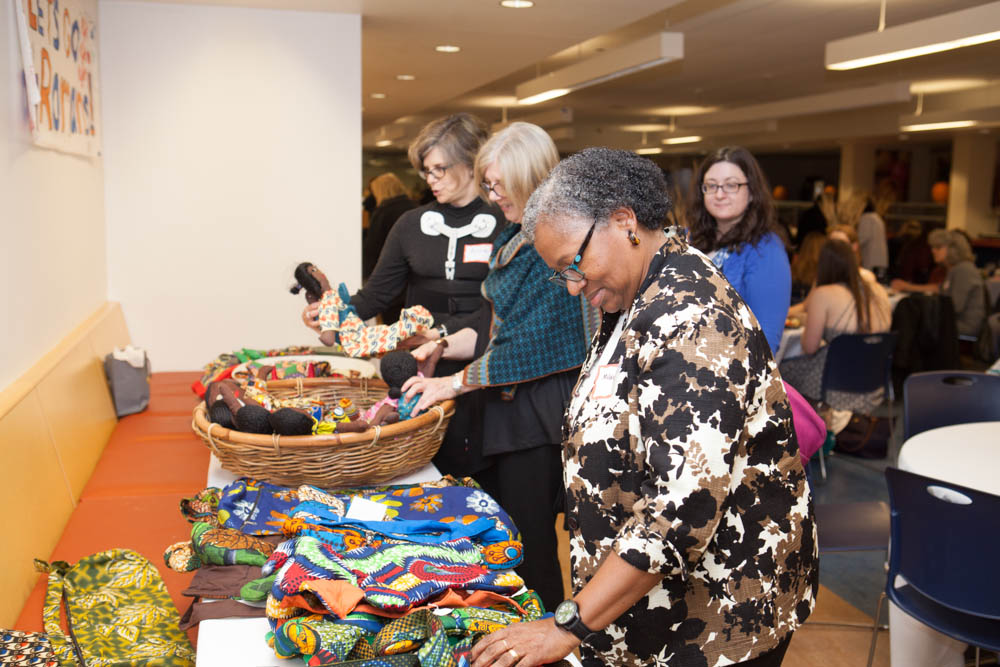
Beautiful Rwandan crafts were available for donations
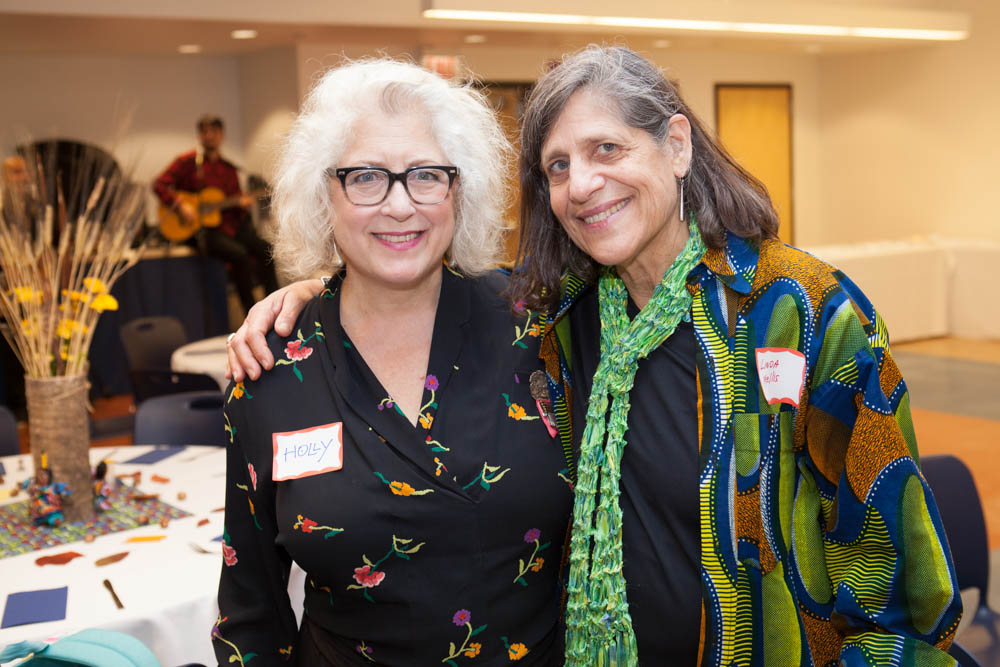
Holly Birnbaum and Linda Mellis
Holly Birnbaum and Linda Mellis, Chicago steering committee members
enjoy the festivities
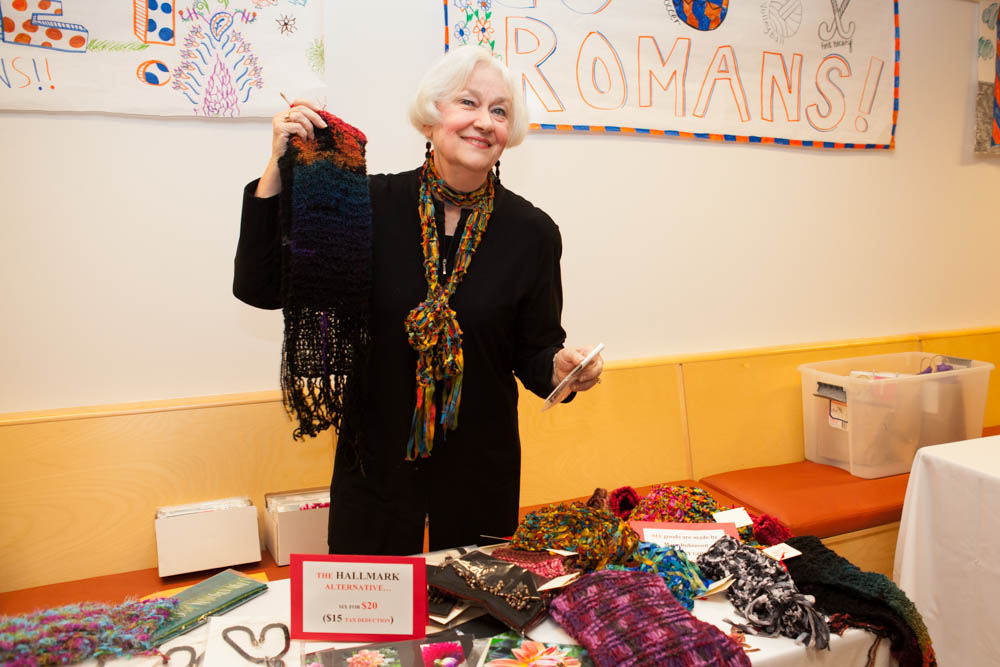
Mary Robinson’s scarfs
Mary Robinson’s hand made scarfs and jewelry (Ribbons for Rwanda)
were a hit as usual
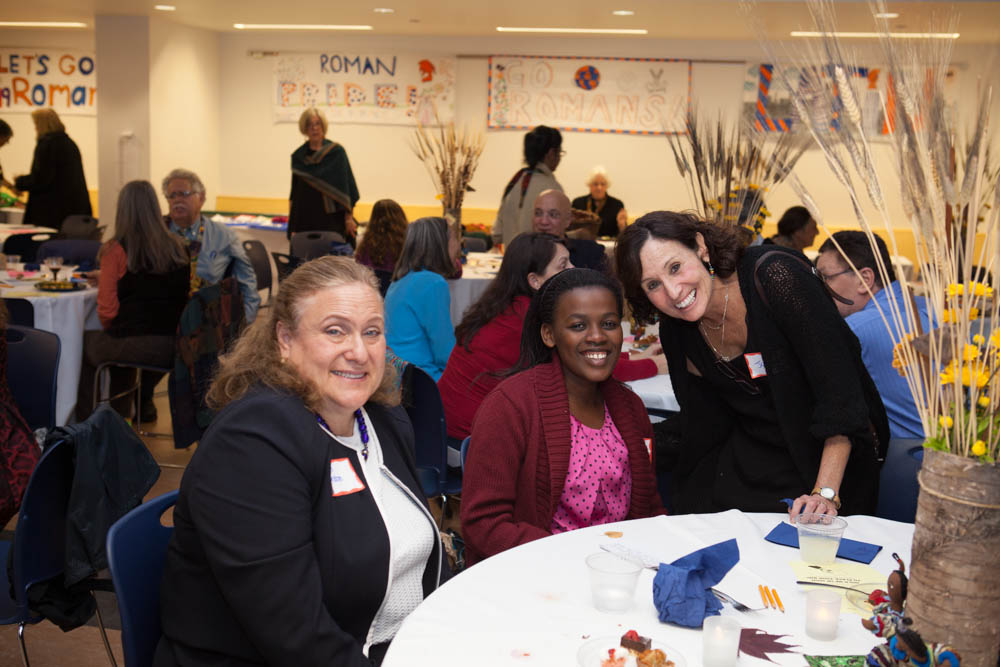
Joselyn Umubyeyi, curently a student at Harold Washinington Comunity College, who presented testimony about WE-ACTx in Rwanda, shares a moment with her host mother, Jill Gordon (left) and WE-ACTx supporter Joy Bressler.
Dear friends
Last Sunday WE-ACTx celebrated 10 years in Rwanda with a giant anniversary party in Kigali. Over 400 children in pink and black T- shirts (silkscreened by Dutette, one of the income generation cooperatives of WE-ACTx For Hope patients) came with their parents to sing, dance, hear speeches and testimonials, and enjoy a buffet lunch and huge cake. Joined by WE-ACTx For Hope Board members, partners, and representatives of the government, staff and patients cheered our commitment to caring and respect for those with HIV and their families. It was a day of joy, though many in attendance were moved to tears as we heard stories of gratitude and adversities the patients had overcome.
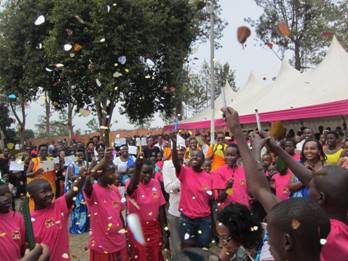
I couldn’t imagine during that first trip to Kigali in April 2004 how many times I would return and how many wonderful people I would work with and get close to. But when I think about the first year, I’m not really surprised that we defied the odds and are still here, working collaboratively with so many to meet all the challenges.
Within days of arriving 10 years ago, I met Frank who helped develop the income generation program. Five months later when I came to staff the clinic for a month, I met Christine who now works in the pharmacy, Marcel who drives us, Seraphine who cooks at the house in Kyovu, Josee who takes care of young children in the clinic, and Naila who helps advocate for patients. That’s when Mary Fabri (who took the pictures in this email) came to help integrate mental health care into primary HIV care. By January 2005 I had met Felicite, now the WE-ACTx For Hope Board president, Henriette, the trauma counselor and Youth Program Director, Chantal, Director of WE-ACTx For Hope, and Irene, the trauma counselor. Chantal and Rose, 2 nurses in the clinic, joined soon after that. We knew we had to respond to the urgency of HIV in 2004 and 2005 and we have kept at it, facing new challenges but remaining committed to reaching the highest quality of life, and physical and mental health for our patients. Though we have grown considerably, more than 1/3 of the current staff worked together that first year of WE-ACTx to build the clinic services and meet the emergency of getting medications to the very sick.
At the celebration we gave certificates of appreciation to the many staff who have worked with us for 10 years and 5 years. Patients gave moving testimonials about how their lives have improved. And we applauded the 52 patients who first came looking for antiretroviral medications in 2004 and who are well and strong and still coming to the clinic 10 years later.
Here is a Rwandan article on the event with some other pictures http://www.igihe.com/ubuzma/indwara/article/umuryango-we-actx-for-hope-umaze
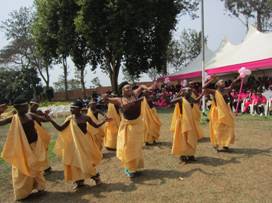
It was a day of many smiles as children of all ages performed traditional dance, hip hop, played guitar and drums, and sang. With help from talented older youth and Musicians Without Borders’ Chris Nicholsen (the music therapist from England), the children’s groups wowed us all. Their discipline in preparing their performances, and their exuberance to participate with their friends and families warmed everyone’s heart. Seeing so many healthy children and families reminds us how far we have come with access to antiretroviral therapy (ART), disclosure discussions with children and their mothers, youth support groups, improving adherence and giving hope.
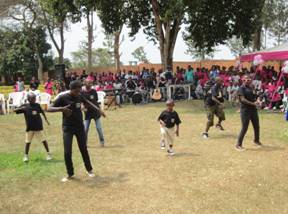
Of the ~2000 WE-ACTx patients on ART, 81% have undetectable virus, which means the medication regimen has been successful in suppressing their virus and in preventing transmission. In July, the Rwandan government protocol will be revised to begin antiretroviral therapy earlier in HIV infected persons (at a CD4 count of 500, instead of current 350 level). That will mean 120 additional WE-ACTx For Hope patients will be starting ART in the next 6 months.
As in Chicago, and other settings some patients find it very hard to take their medications regularly and get very sick. We have utilized Direct Observational Therapy (D.O.T.) for several young patients. They come daily to the clinic and take their medication from the nurse who also gives them a small snack. This week I saw again one of WE-ACTx For Hope’s amazing success stories: a 20 year old orphan living with his brother, who was very sick with malnutrition and TB and advanced HIV. He was nurtured back to health with medications and a hot meal brought daily by one of the staff and has now gained over 40 pounds and will return to school. We just enrolled another patient, a 20 year old mother of an 18 month old who is depressed who finds it very difficult to take her medication regularly and is very immunocompromised. I hope we have success here as well. Although D.O.T. is labor intensive for the patient and our staff, and expensive in terms of transport it has worked for young patients who we don’t want to give up on.
On a sadder note, we still have not found a school for Pretty, who I wrote about several months ago. She is 16 and unable to talk since a stroke from HIV vasculitis 18 months ago. Services for disabled persons are rare and not adequate in Kigali. We are reaching out to Handicap International, and advocates who have created alternatives here for their own children and others. I hope to be able to report some progress on this soon.
WE-ACTx continues to attract interns. This summer, two interns are working on improving the income generation programs. Always challenging to find markets, to keep hope when orders are fewer and to develop better accounting literacy, it’s nice to have Brian from Chicago and Allison from Boston helping the groups out. Summer camp will again generously be supported by The Latin School in Chicago during the end of July and beginning of August, and a group of Latin students will join the peer parents in running the camps at Nyacyonga (rural clinic area) and downtown.
Our NIH-funded study to improve adherence more generally in youth 14-21 is going very well. The youth leaders, trained by Mary Fabri, are currently delivering the 6-session intervention (psychoeducation, relaxation, and trauma informed cognitive behavioral therapy) to the second group of participants. The groups run smoothly and everyone participates enthusiastically. Attendance at the intervention sessions is very high for the youth and for their caregivers/parents. The Rwandan research psychologists who supervise the program are superb. Here’s a picture of the team with Josette, one of the psychologists.
Today’s world is a difficult one, with so many conflicts in every part of the globe. But we have a special healing space in Rwanda, one of the sites of terrible past conflict, giving hope in a worrisome world. At WE-ACTx For Hope people from different parts of the world are working together and building a better model. A local model where people matter, where we try new things and try to do the best we can to overcome past trauma and lifelong infections. We thank our patients who have stood by us and continue to inspire us, and the staff who have worked so hard and continue to be committed to high quality service. And we thank you, our supporters for being there for all of us.
This year has seen an exciting fundraising development. Three young couples have suggested to their friends and families to donate to WE-ACTx in honor of their marriages. (Full Disclosure: 2 of the couples are part of my family, and one is part of Linda Mellis’s family, the Chicago WE-ACTx Coordinator.) To Davida and Sim, Daniel and April, and Eugene and Hima: many many thanks for spreading your love to WE-ACTx and Rwanda.
Thanks for your support,
Mardge
Kigali, January 2014
Dear friends
2014 is the 20th anniversary of the genocide in Rwanda and preparations are underway here for this difficult period. The genocide memorial torch was lit in early January and will be carried countrywide concluding on April 7, the beginning of the 100-day national mourning period. Many activities are planned for learning, commemoration, and rebuilding. Kwibuka is the Kinyarwanda word for “remember” and the title of the 2014 commemoration of the 1994 “Genocide against the Tutsi.” There are conflicting views on how the commemoration period affects Rwandans –whether the memorials contribute to healing or the long memorial period reignites traumatic memories. And whether the memorials increase divisions and suspicions or promote unification. This year things seem noticeably tense, with more armed soldiers patrolling the streets, probably because of the recent murder in South Africa of an exiled former colleague but now enemy of President Kagame.
For me, this Kigali visit is especially exciting because my husband Gordy is here for 10 days, and my son Eugene and his partner Hima (family medicine residents at Montefiore Hospital in the Bronx) are working at the public Central University Hospital of Kigali (CHUK) for the month. They are seeing up close the growth of medical post-graduate and specialty training via the 7 year Rwandan Human Resources for Health Program, a partnership with many U.S. hospital and medical institutions to address the critical shortage of skilled health workers, poor quality of health worker education, inadequate equipment and management of health facilities.
In some ways medicine is practiced the same in hospitals all over the world: early morning rounds; students, residents, and attendings making sense out of patients’ presenting symptoms; a stream of patients being admitted and discharged. But of course things are especially difficult in Rwanda’s public referral hospital. Eugene and Hima have seen patients who can’t afford antibiotics and have to wait too long for treatment –patients/families have to come up with the copays before a test is done or drug administered–; for others who can’t afford needed scans, diagnoses remain uncertain. Interventions are delayed and there are deaths that would be preventable in the U.S. There is a nihilistic approach on the part of some young Rwandan doctors from years of these experiences. Gordy is giving presentations on patient safety and diagnostic errors in this context. He finds it particularly challenging and exciting to try to figure out how to make quality improvement principles relevant to their experience and context. Thus the whole family is grateful to be learning and contributing.
Eugene and Hima’s visit to the WE-ACTx clinic and fresh-eyes observations prompted another look at our evaluation of adherence. As a result, we have created a plan to screen annually for adherence to antiretroviral medications during the first months of the year. Using a simple 3 question validated self-report tool, the nurses and doctor at the clinic already noticed that they are identifying patients who they thought were doing well but actually need more education and support to adhere well to their medications.
We have also begun more aggressive direct observation therapy for those youngsters who are not adhering well to their regimens, and have had some success. The program includes extra counseling and a meal when they come to take their medications.
Here, one of the peer advocates is pictured with a 19 year old who comes daily. He had been very sick and depressed. He was started on treatment for TB and has improved in terms of his physical well-being and his spirit to live. We will also start sending our patients who are trained as community health workers to visit those patients who have missed their appointments or need more encouragement to take their antiretroviral therapy.
And after a year of preparatory work, the research program to improve adherence in youth 14-21 through a youth led 6-week CBT group intervention has started. Recruitment at both the CHUK and WE-ACTx support group site went well. The research staff are motivated and the youth are excited to participate. Mary Fabri will train the youth leaders during February and the intervention for the first group will be completed before April, when the genocide commemoration will require everyone’s full attention.
Though we work to maximize the benefits of current treatments here, we worry that Rwandans, and many others in subSaharan Africa are falling
behind in accessing the best antiretroviral therapy because of the expense and unavailability of newer and more effective medications. U.S. guidelines for initiating antiretroviral therapy now include newer protease inhibitors and integrase inhibitors and combinations that remain unavailable to HIV infected patients here in Rwanda. These drugs are considered “third line therapy” here in Rwanda and byWorld Health Organization guidelines, yet are rarely used anywhere in Africa because of high costs. We have to continue to pressure PHARMA to reduce costs and license these life saving drugs for all those who need them.
Our varied support groups continue to meet weekly to address psychosocial issues for about 500 of the 2400 patients in WE-ACTx’s 2 clinics. A 6-month literacy program started this past week for 11 members of the young mother’s group. Hopefully we will be able to expand the literacy program to other patients in the future.
With skills training from Musicians Without Borders, the peer parents have added music activities to what they teach during both children’s Sunday groups. For the older youth, many come an hour earlier to play drums, guitar and keyboards, as well as sing and dance.
Here is the first jam session with everyone coming together: guitars, drums, singing and dancers. Chris Nicholsen, a music therapist from England who has been working with Musicians without Borders and WE-ACTx for the past 2 years brings the instruments each Sunday for these activities.
Chris also has weekly music therapy sessions with a patient we are particularly concerned about. P. just turned 16 and was perinatally infected with HIV. About 18 months ago, while at boarding school, she stopped taking her HIV medications and experienced a stroke thought to be due to HIV vasculitis. After a hospitalization and some rehab, she is unable to speak and has little strength or fine motor coordination in her right hand. This has been devastating for her and her mother. Previously she was doing very well in school and spoke fluent English. Now she is unable to go to school as she has difficulty caring for herself and because there are no dedicated schools for students with disabilities in Kigali. We have set her up with an IPAD mini to increase communication and play and enjoy music.
Here, Chris is teaching her how to electronically play guitar chords for a song. We hope that Christine, a volunteer social worker who worked with P. last year and is back in Kigali for the next 3 months, will be able to identify options for her to attend some sort of school program.
This April marks not only the 20th anniversary of the genocide, but 10 years since WE-ACTx began working in Kigali. As I reflect on the stories Eugene and Hima bring back from the hospital each day—of both what the staff is able to do and not do; of how much passion remains and how much there is a need to avoid being resigned to the seemingly ingrained disparities—I am proud of what we have been able to accomplish with WE-ACTx. Not only the actual day to day, and 10 year list of accomplishments, but that fact that we offered, and continue to deliver “hope.” It had been 7 years since Gordy was last here and he was struck by the relationships (in many cases continuing since then) that have been built with the staff, the continuing packed waiting room in our downtown clinic, and the diversity of our programs (he is even going to take a guitar lesson from Chris).
So as we celebrate this anniversary we are aware of how much we have learned and contributed and how much still has to be done. We thank all of you for all your continued support.
Mardge
by Jessca Early, a nursing student, during her second time volunteering with WE-ACTx in Kigali
In late May—after a day spent napping off the jet lag from my trans-Atlantic, multiple layover, journey from Boston to Rwanda—I found myself sitting in a plastic lawn chair squeezed into a small medical exam room at the Women’s Equity in Access to Care and Treatment (WE-ACTx) clinic in Kigali.
It was my first day as a volunteer nurse at this community health initiative founded in 2004 by both foreign and domestic HIV/AIDS patients, activists, and physicians. Today, the organization provides medical and psychosocial care to HIV-infected men, women, and children. On this particular morning in the summer of 2013, I was the only foreign volunteer working at its Kigali facility, which serves over 1,800 patients. The clinic is staffed entirely by Rwandans working in interdisciplinary teams of medical and psychosocial workers.
These staff members welcomed me with a flurry of high fives, smiles, and kisses. Despite their warm reception, I was filled with apprehension when the exam room door closed behind me, heralding the arrival of my first patient. Although I would only be observing and assisting Jane, my middle-aged, white-coat-clad, fellow nurse, I was just a newly licensed RN, still operating in student-nurse learning mode. The idea that I might be making an independent contribution to a patient’s clinical care plan seemed far-fetched indeed.
During my clinical rotations in nursing school, I had only cared for one or two HIV-positive patients. So, in a frantic bid to alleviate feelings of anxiety and professional inadequacy, I had spent weeks prior to my trip reading medical journal articles, global health studies, and, admittedly, Wikipedia entries on the transmission, pathophysiology, clinical presentation, and treatment of HIV and AIDS. In a small notebook, I had scrawled “cheat sheets” of CD4 count-based treatment algorithms, common side effects of antiretrovirals (ARVs), and the signs and symptoms of an array of opportunistic infections. By immersing myself in as much HIV and AIDS-related research as possible, I naively hoped that I could compensate for my near total lack of practical experience working with HIV-infected patients.
When Jane’s first patient walked into the exam room, I kept my little notebook of factoids and protocols close at hand. Drawing on my mastery of about ten words in Kinyarwanda, I greeted this forty-something Rwandan woman dressed in a traditional wrap skirt and matching blouse. Jane asked the patient how she was doing and the two launched into an animated discussion in Kinyarwanda that I could not understand at all.
Instead, while awaiting Jane’s translation, I tried to put my skills of inspection (the first step in the physical assessment which had been drilled into my head in nursing school) to good use. I scanned the patient’s skin from head-to-toe searching for rashes, discolorations, hair loss, and evidence of dermatological infections. Watching the subtle rise and fall of the patient’s chest, I counted her respiratory rate and looked for any signs of labored breathing. After making a gross estimation of the patient’s height and weight, I calculated her body mass index as falling somewhere in the low end of the overweight range.
Finally, I observed the patient’s facial expressions, vocal intonations, and mannerisms as she chatted away with Jane. Opening up to a blank page of my notebook, I jotted down my initial clinical impression: “Middle-aged, overweight Rwandan female alert and oriented times three in no acute distress. Appropriate eye-contact, dress, and speech pattern with pleasant affect.” I silently reread my assessment a few times and found myself immediately perplexed:
The red, itchy patches of cutaneous Candidiasis that prey on immunocompromised skin? Negative.
Hollow cheeks and atrophied limbs from malnourishment or HIV-wasting syndrome? The woman sitting in front of me is pleasantly plump.
Signs and symptoms of cytomegalovirus (CMV), pneumocystis jirovecii pneumonia (PCP), or histoplasmosis?
Not present.
In short, where was the presentation of an HIV-positive patient living in a developing East African nation that all my pre-trip research had described?
Before even hearing her reason for coming in, I suspected I would not find a portrait of this patient among my research notes. When Jane translated the chief complaint as hot flashes and moodiness, my suspicion was confirmed. Working in a country with limited resources, immense population pressure, and a recent history of genocide and subsequent economic collapse, where I would surely encounter clinical presentations and illnesses rarely seen in the US, I formulated my first likely diagnosis: menopause.
Through a multimodal approach to care including individual and group psychosocial counseling, peer-to-peer patient education, nutrition assistance, income generation projects, and targeted support programs for children and young adults, WE-ACTx has spent the past decade tirelessly promoting patient adherence to therapeutic regimens and self-management of HIV. In its early years—when ARVs were just becoming available in Rwanda—much of WE-ACTx’s work was directed at facilitating access to HIV-treatment. Faced with a patient population experiencing rapid disease progression and resulting immune system failure and opportunistic infections, WE-ACTx’s priority was getting patients on life-saving drugs.
Today, the Rwandan government provides ARVs for free through a network of private and public clinics. Moreover, WE-ACTx’s provider-patient partnerships have markedly increased adherence to these drugs. As a result of these collaborations, the clinic can devote more energy and resources towards primary care, in addition to HIV-specific treatment. Patients receive care for and learn how to manage medical and psychosocial issues from hypertension and diabetes to depression and domestic or interpersonal conflicts. From an organization urgently providing ARVs at a time when patients were succumbing to the disease every day, WE-ACTx has evolved into a primary care provider that addresses the holistic needs of its patients and supports their efforts to improve their overall quality of life as people living with HIV—not dying of AIDS.
Which brings me back to my first patient encounter some ten weeks ago. I was looking at the new face of HIV care at WE-ACTx: a rotund, chatty, middle-aged Rwandan woman who was fatigued, not by an opportunistic infection ravaging her immunocompromised body, but rather by a night spent tossing and turning, sweating, and stripping off her clothes as an uncomfortable wave of heat spread over her torso and left her face flushed.
None of the ARVs I had so frantically researched would relieve this sensation or other menopausal symptoms suffered by this patient and numerous others I met who were experiencing “the change” during my visit to Rwanda. In their country, hormone replacement therapy—whose utility and safety remains controversial in the US—is available from just a handful of prohibitively expensive specialists in private practice. Jane and I could only offer reassurance that these hot flashes, while distressing and disruptive, were a classic sign of a natural, inevitable physical and emotional transition rather than a harbinger of disease.
We also encouraged our middle-aged patient to discuss her experience at her weekly WE-ACTx women’s support group meeting, a safe space for sharing medical, familial, and socioeconomic struggles and successes. At this session, her “treatment” would take the form of knowing smiles, nodding heads, words of commiseration, and copious amounts of laughter from fellow peri- or postmenopausal patients. Just a few years ago, this same group of patients had little hope of even reaching middle age and thus being able to experience this natural condition.
In my first encounter with menopause in Rwanda (and many other patient appointments to come), I would not deploy an arsenal of differential diagnoses or drug options. Instead, I would have the far more educational opportunity to participate in the type of interdisciplinary, patient-centered, holistic care—increasingly uncommon in the profit-driven US health system—that all patients deserve whether in a small, developing East African country or the wealthiest nation in the world.
Early, J. (in press). “The Change” in Rwanda. In Gordon, S., Feldman, D., & Leonard, M. (Eds.), Making the team: Case studies in cooperation and conflict in health care. Ithaca: Cornell University Press.
July 2013
Dear friends,
It’s official. Two weeks ago, the Minister of Health accredited WE-ACTx For Hope (WE-ACTx’s vibrant partner in Rwanda, led by Chantal Benekigeri) to manage the clinic in downtown Kigali—a very exciting step toward helping ensure local control, responsibility and sustainability. WE-ACTx For Hopes’s forty Rwandan staff provide medical and psychosocial care to more than 2000 patients at this site. Support for their work is of course still needed and will continue to come from WE-ACTx supporters in the US (as well as supporters in Canada, Australia, etc.). But these steps forward allow the clinic to be much more integrated into the Rwandan public health system and enable access to additional resources available for local NGOs. This includes consultations to assess patients who might need third line antiretroviral regimens because of viral resistance and continued quality improvement activities to maintain WE-ACTx FH’s high retention rates (>94%).
Even with these exciting new developments, WE-ACTx’s summer activities follow a regular pattern. Each summer begins with the June 16th Day of the African Child event. WE-ACTx sponsors 1000 people, including 400 young patients and their siblings and parents at the Presidential Palace Museum, home of former President Habyarimana whose plane was shot down in April 1994 (the plane is still left on the grounds). A wonderful day of celebration and appreciation inspires everyone.
Then the summer interns arrive – a variety of young folks who volunteer and are integrated into the workings of the program. This summer Jessica Early re-joins us. She is now a student in the RN/NP program at Yale. Jess was a volunteer with WE-ACTx in 2009 when she facilitated the youth leaders group and helped the income generation sewing collective, Ineza, develop a website with their stories and mission. Now she’s using her new nursing skills to work in the clinic each morning, learning and sharing. She’s also helping us catalogue the stories and priorities of the members of the Young Mother’s Group (a support group for about 20 women who have young children and few resources). We’ve learned that in addition to their precarious housing, lack of income, history of rape and abuse, and significant stigma because of their HIV, almost half are illiterate. As is the case with much our work and journey here, this discovery had led us to branch out to explore ways to develop a literacy program for these young mothers, which they (and we) feel will help them, their children and their future.
Each July, another returning volunteer, Gia Marotta, prepares the annual summer camp sponsored by Latin School in Chicago. Since 2009, Gia has returned to Kigali and directed this wonderful summer arts youth camp for about 50 HIV infected WE-ACTx patients ages 11-13. Students from Latin School in Chicago raise funds ($20,000) each year for this camp and a group of Latin high school students and their advisor (Ingrid Dorer Fitzpatrick) return each summer to assist. This year, the staff filled the roster with new campers along with a few youngsters who had been at camp previously but who staff felt would benefit from the increased attention. And then the protests began!
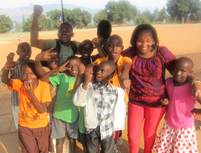
A group of 13 year olds organized to demand to return to camp as well. They argued their case, with strength in numbers. The staff heard them out and after an energetic discussion reached an agreement to offer a special program starting next year for those who have already been to camp. The picture above was taken after the resolution. We love their spirit (and the added demands it has placed on us)!
One 12 year old who will be coming back to camp this summer is Simon (not his real name). Simon’s family is very poor. Each month, his mother tells us she has to choose between paying the rent and feeding Simon and his 14 year old sister and 5 year old brother. The family is one of those receiving the WE-ACTx’s monthly Sosoma (nutritious porridge) supplements, but as they have little else to eat and use it as a meal for everyone, it lasts only 2 weeks. Simon learned about his HIV status when he was 10 and has been having some difficulties at home and school since then. He had to repeat second year of primary school and hasn’t been in school for the past term because he lacks the needed school fees. He has taken to stealing hardware like door handles and locks and water faucets to sell to get money for food. Two months ago he was caught and put in jail with adults. In Rwanda, it is illegal to send children like Simon who are under 14 to jail. We learned later this can be challenged but requires some proof of their age (few here are born in a hospital and have a birth certificate). Simon was abused in jail and wasn’t given any of his HIV medications, and his HIV relapsed. Upon his release, his mother brought him to WE-ACTx and he was hospitalized for a week. The psychosocial team, with help from Mary Fabri, long term WE-ACTx Mental Health Director (and my close colleague and friend from Chicago), is working intensively with Simon and his mother. Funds are being secured for rent for the family and school fees for Simon. We are sensitizing the staff to more swiftly learn about any jailings to ensure that younger patients are freed and older ones receive their medications while there.
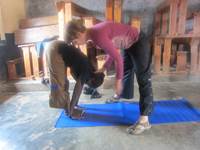 This summer, Project Air (the amazing Yoga program in Rwanda working within WE-ACTx support groups) has started a new yoga group for young women. The girls did not want to learn yoga with boys and had trouble finding clothes they were comfortable in to practice. So Deirdre Summberbell, Project Air Founder & Director, secured yoga mats and free flowing stylish yoga pants which magically jump-started their yoga postures as you see above. Deirdre is training two WE-ACTx patients to be yoga teachers in a program supported by Chicago donors. The way our patients have latched onto this approach to heal their minds and bodies has been extraordinary. Particularly for this new girl/young women’s group, their strength and discipline have been motivating and inspiring and we look forward to their next steps.
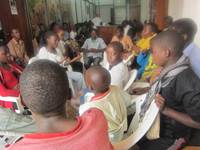
Unfortunately, the Rwandan government has significantly reduced the number of scholarships to the national university, so many WE-ACTx youth finishing secondary school are unable to continue their education and are unemployed. Unemployment among youth in Kigali is high (like the very high rates being reported in Europe, and among African American young men in the U.S.). Thus for the past 6 months, WE-ACTx has been hiring youth leaders who completed secondary school to work. These paid interns assist in the clinic with administrative tasks, educating patients, and facilitate the Sosoma distribution program. The interns have done a great job. Above, Malka (left, in white and with arms raised) is having a “clinic chat” with young patients during the Wednesday Children’s Clinic Day. She is encouraging them to take their medications, and answering their questions about living with HIV. She has already become one of our most dynamic teachers and very much appreciated by the patients.
Unlike what many of you all back in the states are experiencing these past few weeks, our temperatures have been beautiful here in Kigali (60s at night and 75-80 during the day). However the more moderate temperatures can’t cool our anger about the continuing injustices and unmet needs of WE-ACTx For Hope’s patients. Every day we see examples that remind us that caring for people with HIV requires all of us to be respectful, creative and giving, and to struggle for a more just world. Our passions from our first-hand work and relationships with our patients and staff continue to motivate our commitment to support that struggle.
We thank you all for your own commitment and support.
Mardge
Gender inequities in sexual risks among youth with HIV in Kigali, Rwanda
Understanding the experiences of youth living with HIV (YLH) is necessary for implementing interventions that mitigate HIV transmission. We conducted a survey of sexual behaviours and sources of knowledge among 107 youths aged 16-24 attending two HIV clinics in Kigali, Rwanda.
Read the entire article here: Gender Inequities in sexual risks among youth with HIV in Kigali, Rwanda
Exciting news! Youth Ending Stigma (Y.E.S.), a youth group committed to ending stigma about HIV in Rwanda, started by WE-ACTx patients, has been named a finalist for the $25,000 Kalamazoo College Global Prize for Collaborative Social Justice Leadership. Aime Ndorimana, one of the staff of WE-ACTx for Hope and member of Y.E.S. will be in Kalamazoo on May 10-11 to present this video presentation.
Dear friends,
I’m writing you this brief note during a short stay in Rwanda to tell you about two new exciting developments within WE-ACTx in Rwanda.
The dedicated and enthusiastic WE-ACTx Rwandan staff continues to deliver extraordinarily respectful treatment to over 2300 patients with HIV. The HIV protocol in Rwanda starts patients on regimens similar to those used in the U.S. and switches to a second more potent regimen (with more pills and more expensive) if patients do not respond to this initial regimen. Currently, about 5% of patients in the WE-ACTx clinics are resistant and not responding to their antiretroviral regimen. However, unlike those in the U.S. who have access to third line (and more complex) regimens, our patients in Rwanda have had no alternative if the second line therapy was also unsuccessful at controlling the virus (determined by viral load, CD4 cell count, and worsening clinical symptoms).
I am excited to tell you, that a new pilot system is now in place to enable these patients to begin third line therapy. We have waited too long to have this available. So I am thrilled that WE-ACTx patients will now be able to receive this much needed treatment. Global access to needed medications is a priority and is still an emergency to save lives. While Rwanda has many resources for first and second line, and is now opening the door to third line therapy, many patients in sub-Saharan Africa still are on waiting lists for first line. Continued struggles will be needed to see that that high drug company profits don’t result in unaffordable essential medicines, as well as to increase government will (in well resourced and poorly resourced countries).
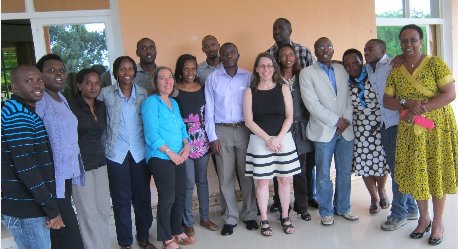
WE-ACTx Rwandan staff
The second exciting development is the launching of our 5 year study to improve adherence among youth in Rwanda. The NIH NICHD-funded study will be conducted within the WE-ACTx and CHUK (public hospital) clinics. This picture was taken at our first team meeting. You see me, Dr. Geri Donnenberg,(UIC) and Dr. Sabin Nsanzimana (RBC) (the 3 Principal Investigators), other co investigators and staff from WE-ACTx (including Chantal and Henriette who many of you have met in Chicago and Boston), the Rwandan Biomedical Center (RBC), under the Minister of Health, and CHUK. We have already accomplished a lot in getting the project launched and are motivated to complete all the needed preparation, logistics, approvals, piloting and identification and training of the indigenous youth leaders to enroll young participants in January.
Of course, these two developments are related, as adherence to medication regimens decreases resistance to antiretroviral treatment. And having strong and healthy Rwandan youth is important to all of us. Again, thanks for all your continued support.
Mardge
Hope you can join us in Chicago on May 16 at Latin Middle School 6-8:30 to support WE-ACTx. Tickets and information available at www.we-actx.org. Also please check out our on line auction www.biddingforgood.com/weactx
Dear friends:
Before I share my thoughts and news from this visit to the WE-ACTx project in Rwanda this month, I wanted to thank each and every one of you for your generous big and small end-of-year contributions to WE-ACTx. They all add up, to a sustained and (as you will read) continuously growing and expanded reach for our efforts here. Not only will these help support our essential activities but we have leveraged your support to accomplish several new special projects.
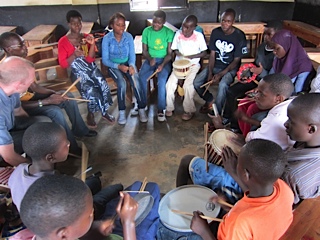
Sunday Support Group with Chris Nicholson music therapist
Soon after arriving in Kigali earlier this month, I joined the Sunday support group, held at St Famille School. For the past 5 months, Chris Nicholson, a music therapist from England, has been working with us for his Masters third year placement. Chris is an experienced musician and a total gem. He uses Music Therapy to provide an important expressive space for the youth and conducted 4 weekly sessions for a variety of groups of young patients. I hope you can see the drums, sticks, bells, tambourines, and other instruments used to explore what it feels like when the youngsters voices are not heard or feelings not acknowledged within groups. Chris discovered WE-ACTx through Musicians Without Borders, a group which has been working with WEACTX for the past several years providing music workshop trainings for our youth leaders .
The joy of the music was quickly arrested when, later that first week I learned that one of the peer leaders (L.) was being held at the Remera Police Station. I accompanied Aime, our youth peer advocate, to the jail to see L., who was held on charges of having an “illegal abortion.” While a new “liberalized” law passed last year allows women to go before a judge to “ask” for an abortion in cases of incest, rape, forced marriage or endangerment to mother or child, abortions are otherwise illegal and punishable with prison terms of 5 months – 6 years (previously 10-20 years!). We waited to speak to L. She was led out handcuffed, and though glad to see us, she soon broke down sobbing. She had gone to a neighborhood clinic after she started bleeding. Someone there accused her of having had an illegal abortion; the police were called and took her to the police hospital and then to the jail. L. is 23, had a child 2 years ago, and has been on birth control pills since then. She had no idea she was even pregnant (still not clear). We attempted to secure her release but it was impossible. The police stated they were awaiting the hospital report to determine whether she would be prosecuted. It looked like the hospital report would clear L., and she would be released the next day.
After another two days, we contacted a lawyer through friends/colleagues and he told L not to talk to the prosecutor without him. He discussed the case with the prosecutor to avoid having to go the court. The lawyer’s standard pretrial fee is $500 (an enormous sum of money here where people typically earn <$2/day). If a trial was scheduled, the price would go even higher. After attempting to bargain down the fee, I learned that this lawyer was actually an extraordinary outspoken advocate for women’s right to abortion in Rwanda. He stayed on this case and we paid the $500. But still additional days passed, and L. was still not released. After many conversations and delays, the lawyer told us the prosecutor was almost finished, he just needed to “check some facts with the community elders and neighbors,” as there were some problems between L’s family and the neighbors. What did this false accusation of getting an illegal abortion have to do with the neighbors I asked? And then the answer came, one that is often the answer when things don’t seem to make sense in Rwanda. Was it stigma from HIV? No, he said, it is the genocide. L.’s neighbors were retaliating because her family had given evidence against their family members who were imprisoned for crimes during the genocide. It took another few days, but after 13 days in jail, L. was finally free. We celebrated, but are sobered by the many issues this has raised. And the release came on the 40th anniversary of Roe v Wade!
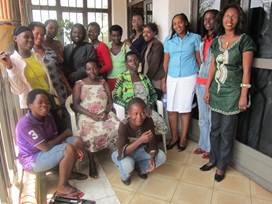
“young mothers” group, a weekly support group facilitated by our trauma counselors
L. is a member of the “young mothers” group, a weekly support group facilitated by our trauma counselors. As part of a newly funded initiative to address the many challenges faced by these women, we held a focus group and introduced the women to a visiting volunteer social worker spending the next 3 months with us in Kigali (her husband is a pediatric surgeon training residents at CHK, the public hospital in Kigali as part of the U.S. university training consortium). The young mothers group is comprised of 13-16 women ages19-27. They each have 1-2 children aged 1-13, and one is currently pregnant. Only one completed high school, most of the others stopped before the 9th grade, often when they had their babies. Several said their pregnancies followed rapes; and many were under 16 when they became new mothers. Only one has an infected child. All are single and very poor. One third have CD4 cell counts below 300 (meaning they are significantly immunocompromised). All have been prescribed antiretroviral therapy, though adherence is inconsistent. Some live with family members or rent rooms; but almost all feel like they don’t have a room of their own. Many of their families either do not know or else reject them because of their HIV status; other family members don’t believe they were actually raped (shades of Republican politician beliefs). Naturally they all want stable housing, the ability to pay their children’s school fees, and jobs. And we are working to help. During 2013, this group of young mothers will now have support and assistance to work together to problem solve, gain skills, help each other, and plan for a better future for themselves and their children.
I am pleased to report two new positive developments that we have achieved, making this a very exciting time for WE-ACTx.
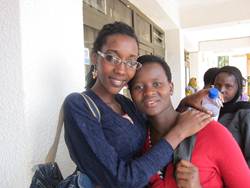
"WE-ACTx for Hope" Rwandan NGO colleagues
First, our Rwandan colleagues have now completed the legal transition from being part of an international NGO to creating a new officially recognized organization–WE-ACTx for Hope. As an official local NGO partnering with WE-ACTx, WE-ACTx for Hope will manage the clinics, support services, and income generation projects. This will allow the local organization to solicit additional funds only available to local NGOs. Organizations like Australian Rotary (I met our dear Australian friends Sue O’neill and Graham Taylor in Sydney this past November!), which supports the nutritional supplement SOSOMA program, only donate to local NGOs and thus will be able to support our work. In addition to this potential financial benefit, this change allows us to better connect our work here to the local women’s associations and the government giving additional recognition, status, and (hopefully) sustainability to the program.
The Board of Directors of new WE-ACTx for Hope NGO is very strong, and is led by our long time friend Felicite Rwemarika (who some of you may have met in Chicago). The first all-staff meeting with the Board took place this week and contracts with raised salaries (lowered last year because of reduced funding) were announced.
The other big news is that the U.S. NIH Institute of Child Health and Development (NICHD) has awarded us a 5 year grant to conduct a randomized control trial to evaluate an intervention to improve adherence among HIV infected youth aged 14-21. We worked hard to write this grant, and had been hanging on a cliff (fiscally and figuratively) for the past few months, uncertain if we would actually receive the funding. The centerpiece of the project is the training of Indigenous youth leaders to conduct an enhanced trauma-informed CBT (cognitive behavioral therapy) intervention delivered via 8 weekly sessions with groups of 8-10 younger patients. It represents an innovative approach to address the serious challenges to medication adherence (depression, gender based violence, logistics and problem solving) in our patient population.
The research collaborative effort leadership includes Dr Sabin Nsanzimana, Head of the Rwanda Division of HIV/AIDS, STI, and Other Blood Borne Infections at the Rwandan Biomedical Center under the direction of the Ministry of Health, and Dr. Geri Donnenberg, who directs the Healthy Youth Program and the Community Outreach Intervention Project at University of Illinois at Chicago. Mary Fabri, the WE-ACTx Mental Health Director, will help design, implement and supervise the CBT intervention. This grant greatly strengthens WE-ACTx for Hope and facilitates our contribution to improving the health of young people with HIV in Kigali as well as develops, what we hope will be an international support and adherence model.
So as you can see, there is much to do to provide high quality comprehensive care to patients in WE-ACTx for Hope, and there will be no end to new crises. But the staff and patients are moving forward. l continue to learn and with the staff and colleagues here (and your continued support at home) will use all of the lessons from the past 9 years as we embark on these exciting new projects.
Thanks again,
Mardge
Dear friends,
Summer is an especially exciting time for the young patients at WE-ACTx here in Kigali. On June 16 we celebrated Day of the African Child (DAC). Over 800 children, youth and family came together to acknowledge how well these young folks who are living with HIV are doing. Everyone received a new green DAC t-shirt and holiday meal. Many children performed and danced and were given awards for school achievements. Rwandan musicians including Kim from the Rwandan Music School and super star rapper Young Grace entertained.
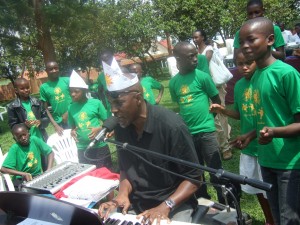
Celebration of "Day of the African Child" (DAC)
Music has become an integral part of healing and building strength among youth in WE-ACTx. Since the summer of 2010, volunteers from Musicians Without Borders have sponsored an exciting intensive training program for WE-ACTx youth leaders. (see http://www.newtimes.co.rw/news/index.php?i=15008&a=54189) Musicians without Borders (MwB) is an international organization that uses the power of music to connect communities, bridge divides and heal the wounds of war and conflict. This year they sponsored two 2-week workshops and have scheduled a 3 week workshop for late July-August. The workshops focus on singing, voice training, drumming, songwriting and teaching for WE-ACTx peer parents who will lead Sunday support groups, camp groups and other groups in the future. Collaborating with MwB, and getting to know musicians Danny Felsteiner and Fabienne van Eck (from Israel), Joey Blake (from Boston) and Laura Hassler (from the Netherlands), has been very inspiring for all of us at WE-ACTx. MwB has also connected with local musicians at the Kigali Music School who now provide weekly trainings for WE-ACTx youth leaders. A celebration of this work was held in April for our patients and their families and was supported by the Dutch Embassy.
The WE-ACTx youth leaders are among 600 youth under 24 years of age seen for comprehensive HIV primary care in the 2 WE-ACTx clinics (downtown Kigali and the more rural public health center in Nyacyonga). We are extremely fortunate to have two new sources of funding for the nutrition and retention aspects of our youth program–from the Rotary Club of Kenthurst, Australia and the Boston based Robert F. Meagher Foundation. These only partially make up for the loss of the Ronald McDonald House Charity funds, but broaden our donor support base to include these and other new caring and interested groups.
WE-ACTx now follows 2,400 patients with HIV. As of July 2012, 70% of these patients are taking antiretroviral medications, which they begin (per Rwandan Ministry of Health protocol) when their CD4 cell count drops below 350 (reflecting suppression of their immune system). The current U.S. recommendation is to begin treatment earlier in the course of HIV, at a higher CD4 cell count of 500, before marked immune suppression, in order to reduce morbidity and mortality. Rwanda and most countries in sub Saharan Africa however are not able to afford this approach and they follow WHO recommendations to begin therapy at CD4 of 350.
Adherence to lifelong antiretroviral therapy is of course a serious challenge for all persons with HIV wherever they live. The Rwandan Ministry of Health now requires patients with HIV to be seen by a clinician every 3 months (increased from every 6 months) to promote better clinic retention. Patients get their medications monthly. About 85% of WE-ACTx patients in Kigali are doing well with improved and higher CD4 cell counts, returning for appointments regularly and tolerating their medication without too many side effects. This is an extraordinarily high retention rate and a reflection of the hard work of WE-ACTx staff and patients. About 10% of patients in WE-ACTx with CD4 counts < 350 but not on medications, have a difficult time overcoming obstacles and starting their antiretroviral therapy (coming late to care and being very symptomatic, poverty, stigma, fear of medication and side effects, incarceration, and unstable housing. And 10% of those on antiretroviral therapy need more help staying on their medications. One of my routine jobs here is to review our data base and identify those patients who need to be reached by phone (for a few), at monthly Trimthoprim medication pickups, or with home visits to begin medications or reinforce better medication adherence.
The best news is that no babies have been born with HIV at the Nyacyonga clinic (where we have our prevention-mother-to-child-transmission program) in the past 4 years. The Nyacypnga post-partum jewelry cooperative Ejo Hazaza (which means tomorrow) continues to thrive and is currently finishing a huge order of beaded bracelets for Indigo Africa. We currently have 4 children 2 – 4 years of age in Centreville Clinic, the youngest enrolled last month and was born to a mother who hadn’t been tested for HIV during her pregnancy Our hope is there soon will be no more young children joining the Sunday Qadaffi support group. But this achievable goal is running up against other storm clouds. For the last few months, the WE-ACTx clinic and every site within the Rwandan public sector have had few condoms to distribute. And even sadder is the report from 3 young girl patients under 12 that they were forced to have sex, reminding us again how very unfair and difficult their lives are and how much is needed to help them and to stop gender based violence.
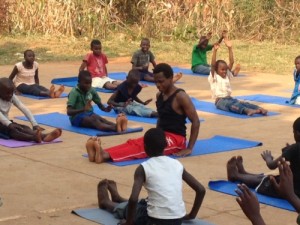
Learning Yoga on the beautiful new mats
This summer has seen a return of some of our veteran volunteers and supporters. Gia Marotta and Chloe Frankel, camp creators from 2009 are back (Gia hasn’t missed a year yet!). Ten students and 2 teachers from Latin High School in Chicago have raised over $18,000 to support the two summer camps in town and in Nyacyonga and will arrive in Kigali next week to visit and help staff the camp for the first week. This will be Latin’s third summer with us. Margot Moinester has returned for a third summer to concentrate on the income generation programs related to Manos de Madres.
And another group from the Evanston Jewish Reconstructionist Congregation (JRC) has returned (with 4 repeaters) to learn more about and help WE-ACTx. They brought 45 yoga mats for our children’s yoga program. Here’s Joseph, a youth leader who has been trained by our partner group “Project Air” and who loves to teach yoga. The children can’t get enough of his tricks and moves and are really excited about learning yoga, so the beautiful new mats were a big hit.
There is something very special about supporters coming back a second and third time. The commitment makes a difference to those who return and those who see them again. Pictured here is the completed new library (which began as a bat mitzvah project by one of the youngsters in the group) at the WE-ACTx clinic: The JRC crew painted, decorated and stocked it with books You can read more about their time in Rwanda on JRC Rabbi Brant Rosen’s blog (Rav Shalom http://rabbibrant.com/), from which I copied the yoga photo.
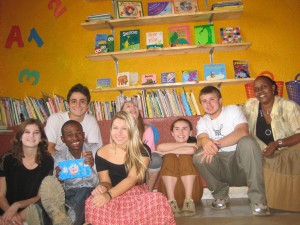
New Library within WE-ACTx clinic
The political situation here is tense. At this moment there are reports of a troop buildup in Goma though most people are not talking about it. The recently released UN report claims that the Rwandan government is backing the rebels in the Eastern part of the Congo. These claims are being denied by President Kagame. The NY Times and other media in the states are expressing concerned about continued political repression in Rwanda and Rwanda’s continued presence in the devastating and prolonged war in the Congo.
Yet some prospects for progress and international cooperation continue to look good. Next week several of us will be leaving Kigali to attend the International AIDS meeting and represent our project in Washington DC. Chantal. WE-ACTx clinical coordinator and Henriette, Youth Program Leader, will present a number of posters that have been accepted for presentation at this meeting. We are looking forward to sharing our work with others caring for people with HIV all over the world. Just as HIV knows no borders, we find it hard (and not really desirable) to compartmentalize the different aspects of our work in Rwanda. We are hopeful that better health, HIV drug treatment, our preventive efforts, along with addressing gender based violence and empowering young people will make a difference.
Thanks again for all your continued support.
Mardge
Dear all: This trip, my daughter, Davida, was in Kigali for the first time, on a fourth year medical school elective. Too exciting! Here’s the report through her eyes:
For the past several years I – and I imagine many of you—have come to expect my mom’s periodic “Kigali report.” It’s hard to believe that I am now in Rwanda, for the first time meeting the people in the pictures and putting faces to the stories we have read, beginning to understand the triumphs and continued challenges of caring for women and children with HIV at WE-ACTx. It feels incredibly special to be here with her this month and to share some of my experiences and reflections with you.
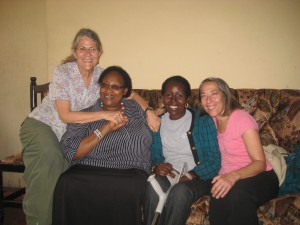
Putting faces to the stories
The week before I joined my mom here, there was a meeting of HIV+ youth on second-line antiretroviral therapy. This regimen has more pills and more side effects than the simpler first line regimen. The young adults discussed the challenges of accepting second-line therapy and the obstacles to taking their medications each day. They brainstormed ways to conceal pills in envelopes and find private spaces to take their morning medications at school. They highlighted the need to be able to contact a health care provider outside of school hours to reduce stigma from repeatedly missing class. The group plans to continue meeting together to think of solutions to their shared struggles, starting with designing an alternative pill box that won’t rattle in their bags disclosing their disease.
The WE-ACTx house is full and everyone is busy working on a variety of exciting projects at all hours. Late into the evening, Mary Fabri and Mardge have been furiously grant writing, submitting abstracts, and writing letters for scholarships for WE-ACTx staff to attend the International AIDS conference being held in Washington DC this July. One large grant proposal is aimed at improving adherence among youth in Rwanda by addressing gender-based violence and depression using a trauma-informed cognitive-behavior (CBT) intervention. Cori, a social work student from Chicago has been working with Mary to further develop the CBT program. Noam (Israeli Brandeis graduate who has a fellowship supporting her stay in Rwanda this year) has been busy preparing for a week-long music training with Musicians without Borders (more below). Emily, a Peace Corps volunteer, is in her final few months of service, partnering with Henriette to coordinate the youth program. She is collaborating with a new Peace Corps volunteer (Kim Baskin from Chicago) who is working near the Nyacyonga WE-ACTx clinic site to help grow the income generation project there.
I’m told that Kigali has changed drastically since 2004 when my mom made her first trip. Perhaps the only constant is the birds chirping outside starting around 5:45, more reliable than any alarm clock. Today the city is abuzz with construction projects everywhere—roads are being paved and sidewalks laid, several tall skyscrapers now stick out from the city center, and dozens of new shiny glass hotels are being built. A European coffee chain has opened up multiple shops. But the current frenzy of development also highlights the contradictions of who has access to these resources. Just a few steps away from the main road and in the neighborhoods outside the downtown where WE-ACTx patients live, there is still a maze of rocky dirt roads without electricity that leads to tightly packed single room homes where malnutrition remains the biggest barrier to adhering to ART medications.
A block away from a five-star hotel where foreigners lounge beside a landscaped pool is the public teaching hospital in Kigali, CHUK, where I have been spending time in the pediatric ward. The ward is a connected block of 8 different rooms, with 12 beds in each room. Mothers and children and often siblings share a bed, with your neighbor about an arms distance away. The first week I was in the “oxygen” room, filled mainly with infants born with congenital anomalies, which if diagnosed prenatally on ultrasound in the U.S., would be surgically corrected within the first few days of life. These patients were weeks to months old, receiving oxygen as their only therapy, as they waited for a surgeon from the private hospital to consult on their cases. It’s extremely difficult to stomach the huge gap in access to resources and treatment here— from the one available blood pressure cuff, too large for every malnourished child in the ward, to poor access to timely life-saving surgeries.
How to best utilize limited resources is a constant discussion, whether at CHUK or at the WE-ACTx clinic, where staff may have to take a 20% pay cut to help keep the daily operations afloat due to the loss of a significant source of funding earlier this year. The cuts are needed to maintain the clinical and psychosocial support services for the program’s 2,500 patients.
Dossa, a 23-year old who translated for me at the weekly support session
One of the important programs is training peer-parents, HIV-infected youth who are selected to facilitate support groups and serve as role models for the younger children. On Sunday I met Dossa, a 23-year old who translated for me (English is one of eight languages he speaks) at the weekly support session. He told me: “I love Dr. Mardge more than I love my family. When I found out I was infected my family wanted nothing to do with me and I thought my life had ended, but through WE-ACTx the pain has disappeared and I can feel proud. I am a peer-parent to help those the way WE-ACTx helped me.”
This week, Dossa and the other peer-parents are participating in a music leadership workshop led by Joey Blake from Boston and Otto de Jong from Holland, both with Musicians without Borders. For four hours each day, after a busy day at work or school, WE-ACTx youth leaders dance, sing, and learn exercises that they will take back to their support sessions with the younger children. I’m amazed how quickly they picked up the lyrics of the American folk songs while I’m still struggling with the proper pronunciation of the five Kinyarwandan words I know. Joey and Otto have met with Rwandan musicians and even the Ambassador from Holland to develop an ongoing partnership to continue this work.
Felicite, her daughter and new grandson
There are so many things to be hopeful about particularly while watching the creativity of the peer-parents through song and dance. Last week, we visited my mom’s friend, Felicite, who previously coordinated the research efforts at WE-ACTx, and met her daughter and new grandson. Shown here, are five generations, an inspiring picture of continuity and pride. I am moved thinking about my mother’s commitment to continuing this work, and about how families and friends are so important to making a difference. Thank you all for making it possible for my mother to show off this amazing program and country this month, and for your continued support.
Dear friends,
Road to St. Famille School, near downtown Kigali
Very busy summer in Kigali for WE-ACTx as usual. Our house is bustling with young volunteers, scores of visitors, preparations for new holiday children’s camp in Nyacyonga (the more rural WE-ACTx clinic), counselor training for the new 1 week Nyacyonga and 3 week Centreville youth camps, juggling new income generation programs, preparing youth specific HIV educational brochures, and the upcoming work trip by 11 Latin high school students (4 are returnees!) and their 2 chaperones. While our house hasn’t changed much over the 7 years we have been working here, much has in Kigali—more paved roads, more high rises and tourist type malls, more Asian ex-pat restaurants, more patients with cell phones, international film festivals, and greater English facility by our younger patients.
Sunday School Family Groups
We’ve divided up the youth programs: so children under 12 still gather and play at the Qadaffi Mosque Sunday afternoons, but older youth now meet earlier at a different site in a school associated with St Famille Church, near downtown. During the genocide, hundreds of Tutsis were murdered in this church, the largest in Rwanda. On April 15, 1994, many Tutsis who had sought refuge in the Church were turned over to the Interahamwe militia by the Church’s priest. In this picture, you can see the road we walk down to get to the school at the lower right. Contrast this with the large Kigali City Tower in the back on the right, a soon to be opened new tourist mall. On the left, the other skyscraper is the National Social Security building.
Though it is almost impossible for me to scramble down the steep hill and stay upright, over 170 young people manage to and meet each Sunday with their “family groups.” They discuss the week’s challenges the first hour, then join with others for a larger general discussion. Activities follow and then a snack and distribution of transport money. Here the yoga teacher volunteers have brought hoola hoops–clearly a huge success. We plan to continue our efforts to increase adherence and autonomy among these youth—one of the most challenging and rewarding parts of our program
We have exciting news on the income generation front. Ineza continues to thrive and improve on the quality of their beautiful products that many of you have purchased (and remember, we are always looking for folks to host a house party to learn about WE-ACTx and give these crafts for donations). But now, in addition, there is a jewelry making collective at Nyacyonga (called Ejo Hazaza and made up of women who went through the WE-ACTx’s perinatal program to prevent HIV transmission to their infants) and a silk-screening group (called Dutete, made up of women from many WE-ACTx support groups), and the group of vocational school students studying tailoring who will start their internship under Ineza’s tutelage in October. With the help of Emily, our incredible Peace Corps Volunteer, we expect a coming together of all these efforts as Hjo Hazaza’s jewelry are packaged in bags made by the students under Ineza’s direction, with silkscreened labels by Dutete’s members. We also thank Susan Moinester from Manos de Madres, Abraham Kong’A, a Kigali artist, store-owner, and teacher, and Helen from Kenya who built the kiln out of a trunk and taught the women in Hjo Hazaza to make beads and create designs out of recycled glass, for their help in starting these exciting efforts.
In the clinic, we continue to work on antiretroviral adherence and follow up. We are particularly concerned about the youth who are on second line therapy and still have so much trouble with adherhence. At the quarterly association meeting last week, leaders told us that many members are finding it too difficult economically to stay in Kigali and are moving out of the city and may stop coming to the clinic for their medications. This year we are prioritizing helping parents inform their children aged 8-12 with HIV of their HIV status, which is the protocol in Rwanda.. This is a very difficult issue for families everywhere. Of course, preventing HIV transmission from mothers to infants will eliminate this problem worldwide, and Rwanda is doing well with its perinatal HIV programs. HIV counseling and testing and antiretroviral therapy is accessed by a high percentage of Rwandan pregnant women. The Rwandan protocol also includes breast feeding until 2 years of age and administration of antiretroviral prophylaxis to all children born to HIV infected women to prevent any post partum infections..
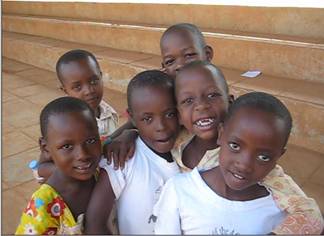
Children don't always know they are infected
Of the 150 children in WE-ACTx aged 8-12, only half have been told that they are infected by their parents. Some parents tell the children the medications are vitamins or to help them grow. Many parents feel guilty, or do not want to face their children’s questions and anger when they tell them that they are living with HIV. Some feel the children will tell others and that the whole family will suffer from stigma. We have started a Friday morning disclosure support group for mothers to talk with each other and WE-ACTx counselors about the best strategies for disclosing to their children. This past week, 33 mothers attended, and 1/3 had not yet told their children. They learn from mothers who have shared the news with their children and receive support as needed from the counselors. Some of the children knew their status before their parents get around to telling them. The children in this age group attend our Qadaffi support group every Sunday afternoon. It is a time to be free to sing, dance, run and play, and be the precious children they are.
Where next? Obviously sustaining our core activities remains our highest priority. We have written grants for an innovative youth adherence program using peer led support and CBT and telephone text messaging for medication and appointment reminders. We are excited that the Rwandan government’s TRAC clinic is partnering with us on this proposal. Personally, I am awed at the way new needs and innovative solutions continue to arise from our staff and patients. It is the thirtieth year since HIV was first reported and we are still figuring out the connections of passion, science, and advocacy Thanks for being part of this journey with us.
Mardge
With Egypt, Tunisia, Jordan and Yemen witnessing earth-shattering changes, and major U.S. cities overwhelmed with snow and budget cuts, I am spending the month in Kigali working with WE-ACTx. Obsessing on the day-to-day problems here feels at times far removed from these major upheavals. But I also sense that there are many small and big ways these global events and struggles for freedom, respect, equity and justice, are intimately related to our small project here in Rwanda.
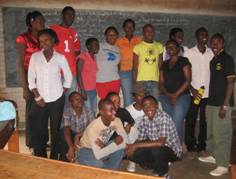
WE-ACTx “peer parents
Pictured at the left are the WE-ACTx “peer parents.” They are a special group of WE-ACTx patients, many of whom have participated in youth leadership training. Some were counselors in last summer’s week camp program or lead younger children in games and sports during the Sunday afternoon support group at the mosque whose open space serves as our weekly congregating venue for younger HIV infected But now they are playing a new role as the leaders of WE-ACTx youth program. Youth Coordinator Henriette Byabagamba has trained them to provide family-like support to WE-ACTx patients age 12-19. Each Sunday these youngsters gather at a school called St. Famille, near downtown Kigali. St Famille has many classrooms and a large yard for soccer and other sports. During the first hour, 2 peer parents lead their group of 10-15 youth and discuss the week’s events, about school, their families and coping with their HIV, especially discussing taking their Trimethoprim/Sulfa or Bactrim (prophylaxis to prevent pneumonia and other infections) and antiretrovrials (ARVs) to fight the virus. Then the “families” join with others to form 3 larger groups and continue the discussions, emphasizing the good ideas that came up within the smaller groups. The youth then have activities including yoga, dance and soccer. Finally they all come back together, take a (somewhat) nutritious snack and receive transport money to get home.
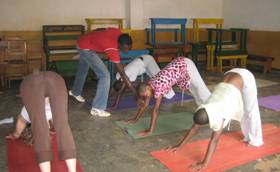
Youth activities include yoga, dance and soccer
The older youth (20-25 years old) who are not peer parents participate in a support group for out-of-school youth led by Irene, one of WE-ACTx’s senior trauma counselors. They share their (often closeted) stories about being, in many cases, orphans, having their education disrupted during the genocide, not completing primary school, or having young children of their own and desperately needing to be working. We are especially excited that our wonderful friend and supporter Susan Moinester has started The Sylvia Feder Youth Vocational Training Program of WE-ACTx, in memory of her mother-in-law, to address some of the needs of this older group. The Vocational Program will support a two year cycle: during the first year, the program will provide tuition for the year long “tailoring” curriculum, including the required school uniforms and supplies, and food and transport; the second year, support will include start up equipment, and food and transport to help ensure the group’s new association gets underway. We will continue this cycle as the WE-ACTx counselors identify more young people who may benefit from this program. We are hoping this program appeals to donors so we can continue it as a legacy to Sylvia Feder and make a giant impact on these young people’s future.
We have designated Wednesday as Youth Clinic Day in order to organize the clinic scheduling so most of the children and older youth are seen on Wednesdays—and to make sure that day is especially youth friendly and has youth-oriented activities to meet their special needs. WE-ACTx staff conducted focus groups with young patients to find out what worked best about the clinic and what needed changing, as well as exploring the challenging issues around taking their antiretroviral mediations. What we learned is quite gripping. They appreciate the doctors and nurses and counselors and having attention. And it was their suggestion to have one day just for children and youth, so groups could share their experiences with each other. And while some felt that their medications were helping them, others stated they didn’t like having to take the medications every day or the idea of having to take medication until they died. They didn’t want to think about their HIV every day.
At the clinic debriefing this week, staff discussed some of the more challenging patients: a 14 year old who complained of having trouble taking his prophylaxis medication and getting his T cells drawn (usually done every 3 or 6 months) and described a difficult time at his home with lots of responsibilities and a troubled relationship with his mother; a17 year old currently was taking second line therapy (after the initial medication regimen was not effective) with excellent adherence and undetectable viral load; another 17 year old who does not want to return to his guardian who he has lived with since he was four, but who now mistreats him; an 8 year old who has to start ARVs but whose grandmother can‘t read and has no watch despite wanting to help the child take her medications; an 18 year old with a low T cell count who is not taking her ARVs and who no longer wants to come to clinic,having moved in with other girls who work as sex workers; and a 16 year old in the last year of primary school, who lives in an orphanage and is refusing to take her prophylaxis.
Adhering to HIV medications is, of course, difficult for everyone and especially for young people, in every country. The WE-ACTx trauma counselors, psychologists and psychiatric nurse do a remarkable job of working with the nurses and doctors to encourage better understanding of HIV and antiretroviral medications, provide adherence aids, work with peers and support groups and continue to find the ways that work best here in Rwanda. Every day we have breakthroughs both pushing the boundaries of discovery of new problems coupled with ever more creative and supportive ways to work to overcome them.
While our patients presently have an adequate supply of medications, the same can not be said of food. Nutrition remains a serious problem; even the older youth have high levels of malnourishment. We provide food at all youth support groups and snacks during the Wednesday clinic youth day, but cannot afford these at the adult support groups. This seven year old girl was new to the Sunday support play group for those under 12 years of age which is still held at the Qadaffi Mosque space. She told us she usually doesn’t eat breakfast and we learned she hadn’t eaten for the preceding 2 days. After this banana and some milk she joined her group for games.
I am always moved by the ability and commitment of the WE-ACTx staff to think of new ways to meet the needs of the patients. But sometimes the staff have problems as well. During December, one of our peer advocates was very ill. At first she was diagnosed with malaria, but then she was found to have tuberculosis meningitis. Alice was in a coma for several days, but upon starting treatment she woke up and is now recovering. She is now able to walk with a walker and getting stronger. Alice had told me many stories about Rwanda, the genocide and the political situation these days. She’s a great storyteller. She was a soldier in 1990 with the RPF, one of just a few women soldiers who lived in the mountains in the northwest part of the country with the army. So, she is a definite fighter. She is sharp as can be now, though recovery will take quite a while. When I showed her the pictures of the peer parents she declared “ah, the youth leaders, the future of Rwanda!’’
My month here has been especially fun and rewarding as Linda Mellis and Mary Fabri have been here teaching two week long classes on trauma informed cognitive based therapy. Mary has been working on this Rwandan specific adaptation of this curriculum for quite some time. The culmination of that work will be training 36 trainers to use and train others to use this important approach to reduce symptoms of depression and PTSD. . Here, Linda took a picture when we visited our long time friend Felicite (WE-ACTx former research coordinator and Girls Exchange Leader and Rwandan women’s soccer league founder) and her daughter Queenie. Sassy women can make a big difference.
Thanking you for your continued support for WE-ACTx,
Mardge
Dear friends
As we followed the election tensions in Rwanda including the arrests, grenades and murders over the past few months, I worried how things would feel when I returned to Kigali this summer. We were especially concerned, bringing over 8 Chicago high school students. However, for the past few weeks the city has been quiet except for major campaigning by Paul Kagame and his party. The opposing candidates who have been allowed to stay in the race seem to be there more for show than as outspoken opponents. Kagame is expected to be re-elected on August 9 by an overwhelming landslide. Every day there are loud bullhorns and trucks with music, rallies, posters and banners, and hat and T shirt distribution to support Kagame and the RPF. There is much to contemplate and discuss about the political situation here and the challenges it raises both internally and externally. But that is best done in face to face discussions and in the future. For now, I’d like to update you on WE-ACTx work which in so many ways depends on you.
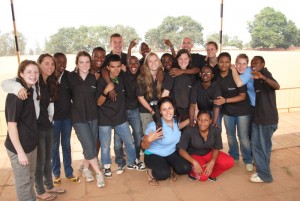
Chicago Latin High School students with WE-ACTx clinic campers
One of the most exciting WE-ACTx activities this summer has been our second annual camp for youth on vacation from school. Fifty 12- and 13-year old patients with HIV who we follow in the WE-ACTx clinic are the campers. Nine Rwandan peer youth leaders (17-24 year olds trained last summer and this year by U.S. volunteers and 2 of whom participated in the WE-ACTx Girls Exchange in Chicago in 2008) are the senior counselors. And eight Chicago Latin High School students raised the $10,000 needed to run the camp, came to Rwanda for 2 weeks and acted as junior counselors for the first week of camp. They were accompanied by their teacher Ingrid Dorer and WE-ACTx Chicago coordinator Linda Mellis. The camp was planned and coordinated by Gia Marotta and Noam Shuster (who also spent last summer in Kigali), with help from Sophie Cohen. Friends of WE-ACTx had connected us with a team from Musicians without Borders (Fabienne van Eck and Danny Felsteiner, from Holland and Israel) who complement this amazing group of energetic and conscientious volunteer staff. Campers gather from 8 AM – 3 PM, receive daily transportation support, a full lunch meal and water bottles. The music, dance, soccer, theatre and art activities are very well organized and fun, but the bonding and sharing and joy is palpable and contagious. This week’s field trip was a safari to Akagera Park, a first for the Rwandan kids.
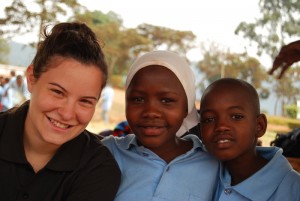
Synergy of global forces make the camp special
Rwandan HIV protocol recommends that all children with HIV be informed of their HIV status by age 8-12, with attention to individual emotional development. The WE-ACTx campers know they are HIV infected, but not one had told any of their friends at school about having HIV. Half have lost one or both parents to HIV. It’s a heartwarming thrill to see these children enjoying themselves, especially since they rarely get a chance to play so freely. But it’s also particularly exciting to think about the synergy of all the global forces that helped make the WE-ACTx camp so special and meaningful for all the campers and staff this summer. The motivation of the Rwandan youth peer leaders is growing daily, and that will continue to inspire the U.S. high school students. Many are insisting they will be back and continue their support. Latin High School has made a commitment to support the camp next summer as well. And the campers are gaining confidence without hiding their HIV status which will be important when they return to school and as they continue to cope with their HIV infection.
The WE-ACTx clinics currently follow 3880 persons with HIV, including over 600 youth. At Centreville, where we care for 3300 patients, the adult women have more advanced HIV, with 43% on antiretroviral therapy (ART) compared to 25% of the adult men. Of the ~1200 adults on ART, 25 are on second line therapy (i.e resistant to first line, more affordable drugs). Attendance rates coming to the clinic and picking up monthly ART treatment and CD4 cell counts tests show exceptionally good adherence compared to international and U.S. benchmarks. We have noticed, however, that older youth 17-22 have difficulty reducing high-risk behaviors and adhering to clinic visits and their medication (this is a problem in the states as well!). Our recent efforts to seek resources to increase youth friendly and enhance girl-specific treatment interventions are to address this difficult challenge.
This summer a graduate pubic health student from Brown University conducted an evaluation of our support groups and found that of 157 women attending WE-ACTx support groups, >85% came weekly. Since joining the support groups, 90% of the women reported disclosing their HIV status to their partner or child and 50% noted a more consistent approach to taking ART. The weekly groups provide an important support system for these women — more than 89% reported feeling less sad and lonely since joining the support groups.
When asked for additional suggestions, the women asked for income generation training to be part of the groups. These women are part of a new group learning how to make cloth beads. The patients praised the counselors who facilitate their support groups for helping them to better understand HIV, feel stronger and more confident and adhere to their medication.
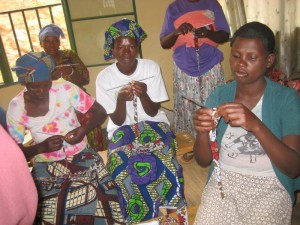
Women making cloth beads for income
The staff of WE-ACTx deserves enormous credit for all of our successes. There has been very little turnover among the extremely committed and hard working providers: nurses, counselors, doctors, peers and others. I sense that the staff has learned so much from the patients in addition to the patients feeling supported by staff—the way it should always be.
We were also gratified (and quite a bit relieved considering how precarious our next two years budget/shortfall looked) to learn last week that it is likely we will receive another round of funding from the Ronald McDonald House Chartity foundation. Although we are still awaiting the official announcement, this is an enormous show of support for the youth and other programs. It is especially meaningful because the Foundation will allow us to try innovative peer programs for the most vulnerable youth in our program.
But a sad story to end on. These stories invariably seem to arise each time I start to put one of these letters to bed, and obviously remind us why we are here, and how our continuing work is so needed. Yesterday, I visited the home of one of the women in the WE-ACTx Ineza sewing collective. She had been traumatized during the genocide, became infected with HIV, and was deserted by her husband. But she had been gaining strength and doing well. She finished her schooling and obtained a driver’s chauffer license. She was also, inspired by our yoga volunteer program, training to be one of the Rwandan yoga teachers. Sadly, she was hurt badly in a moto (popular motorcycle taxis) accident and required an above the knee amputation 2 months ago. Since then, she has had to send her 11 year old daughter to her mother in a rural area as she was unable to care for the child herself. She is very depressed about losing her leg, and is finding it very difficult to make her clinical appointments. She eats poorly and just recovered from a bout of malaria. It was a hard visit, but we encouraged her to use her confidence and strength to overcome this tragedy and of course we will seek to provide needed resources for medical and living expenses. It seems so unfair that one person should have so much to deal with. But of course road traffic deaths and injuries are common and increasing in developing countries (and are predicted to surpass HIV/AIDS by 2020 as a burden of death and disability) that it should not be surprising that she would have to face this next challenge. Not surprising, but not fair—leaving much work to be done on many fronts.
Mardge
It has now been 6 years since WE-ACTx responded to a call by women’s associations to fast track HIV care and medications to their members. So much has changed since then, for me, for those women, for our program, for Rwanda, for global HIV, that it is worth reflecting on what we have accomplished, where we are now, and where we would like and need to go.
I want to share the many successes, but of course I know you expect transparency about our challenges and shortfalls of our work here as well. And I want to be mindful that, with everything going on in Haiti (which has many linkages with Rwanda, as they are the two most densely populated countries, both have sad histories, and Paul Farmer and PIH have major programs in both countries) and elsewhere, that there is much competition for your interest and your generosity. I write these updates each time I come here to show my appreciation of your support, and feeling that sharing this first hand knowledge of the growth, improvements, gaps and inadequacies is important to sustain our commitment to each other and the people here. When I am here in Kigali, so many other global pressing priorities seem distant, but I am very aware that our program is a small project—making a difference, yes; and a good model, yes– but we all need to support so much more here and elsewhere. Many of you responded last fall to help us meet our fundraising goal, and because of you, we did.
First, some very gratifying good news. Patients continue to appreciate the services offered at WE-ACTx. While we were concerned about our consolidation from 3 clinics down to two—closing the Icyuzuzo clinic and transferring patients to Centreville–there has been little disruption in care. Since July, 423 of the 456 (93%) Icyuzuzo patients taking antiretroiviral therapy (ART) have transferred and now access CD4 monitoring and ART at the combined Centreville clinic site. Some of the Icyuzuzo patients not yet on ART, have chosen to monitor their CD4 cell counts elsewhere, but more than 300 of these patients have also transferred their care to Centreville.
We are utilizing a combination of electronic data bases, chart review, home visits, and clinical monitoring to ensure the continuing visit retention, and ART and CD4 monitoring adherence. We now are able to determine monthly which patients on ART have declining CD4 cell counts so we can immediately address their obstacles to adherence. We expect to expand and simplify these quality improvement efforts with the help of a newly arrived volunteer (Allison Wilcox) who worked in Gordy’s patient safety and quality improvement center in Boston. We currently have a total of 3492 enrolled in HIV care, and over 1400 on ART. Hundreds have been seen by the in-clinic psychiatric nurse and other members of the psychosocial team. This is in addition to our testing and outreach programs which have reached over 24,000 people.
Today, at the all staff meeting, one of the cleaners raised her hand at the end of the meeting and said she wanted to thank WE-ACTx for making her strong. She described first coming to the clinic in a very weak state 5 years ago with a CD4 count of 107. She started on ART and she did well. She has a CD4 count of 716 now, and works every day.
Ineza, the WE-ACTx sewing collective (initially started to give newly treated women not just the ability to survive, but jobs and income to put food on the table and raise their children, many of whom were infected) has now become an official independent cooperative in Rwanda. The members have a governing structure and are learning English, computer and business skills. The women support each other, as they recover from the trauma of the genocide, and cope with their HIV and poverty. The sisterhood is palpable when you enter the sewing room. Many of you have seen and purchased their beautiful bags, dolls and other products. With the help of WE-ACTx volunteers (Jess Early and Sasha Hamilton), they have expanded their local markets and started a new blog (http://inezacooperative.wordpress.com). Those of you in Boston (March 26 and 27), Chicago, and San Francisco (March 21) should save the date and join us at concert/readings/fundraisers at which you will be able to purchase the latest crop of their beautiful products. I’m particularly smitten with the new luggage tags and heart shaped ecological shopping bags.
The Nyacyonga clinic on the outskirts of Kigali
WE-ACTx psychosocial care continues to expand. The Nyacyonga (the clinic on the outskirts of Kigali) children and parents Saturday support groups have more members, and the post partum income generation basket program has been very successful. This will likely be incorporated as the next independent cooperative. A total of 34 women and 50 children attend these various groups and activities.
The youth peer leadership program is reaching new heights as it builds on the work of many volunteers over the years with the older youth in the WE-ACTx program. Currently, 9 youth lead groups of 20-30 younger children during the Sunday Children’s Support Group. These specially trained leaders are looking forward to being counselors at the second annual WE-ACTx Youth Summer Camp, working with a group of returning and new volunteers. They will be assisted by a group of Chicago students from Latin High School, which now includes WE-ACTx as one of their summer international projects.
The peer leaders have submitted 2 abstracts which we hope they can present to the International AIDS Conference in Vienna in July 2010 on their organization Youth Ending Stigma and their intergenerational work with the Ineza cooperative teaching computer skills and learning from elders.
Ineza cooperative teaching computer skills and learning from elders
Some of the youth, however, who are enrolled in the WE-ACTx clinic are having a harder time. We are beginning to see older teens who refuse to take antiretrovirals or don’t make their scheduled clinic visits (common problem among U.S. youth with HIV). Some have lost their parents, have been abused, or are with older men. Ensuring that the psychosocial team and the clinical team work together to create the best environment for youth to make good decisions seems to be as challenging in Kigali as it is in the states. We are having a mini retreat for the clinical and mental health teams to work on this integration next week.
Rwanda’s national HIV protocol is very advanced in some ways—1) D4T which causes many body habitus changes is no longer used. Instead, we use tenofovir which is the same first line drug recommended in the states 2) Patients now start ART when the CD4 reaches below 350, instead of waiting until the CD4 declines to 200, as is still done in many developing countries. However, monitoring is by CD4 cells and not viral loads, which we rely on in the states to more quickly detect failure. Presently, viral load tests which take many months to be processed; equipment has been purchased and soon each province will have the ability to run viral loads. Another serious problem is the lack of third line regimens (after first line with nevirapine, and second line with Kaletra). Fortunately there are not many resistant patients (far fewer than in the U.S), but there are patients who are not responding to second line therapy, We have advocated strongly for one patient and the government is trying to secure her medications. We have not been successful yet.
Finally, here’s an exciting and important new development in our program. We began screening women in the clinic for domestic violence last spring. The prevalence was very high—exactly what we find in women with and our matched high risk cohort without HIV in the U.S.–62%. The women of course required some intervention after we identified the problem, and we made referrals to the in-clinic psychiatric nurse, to our legal advocate, and to newly formed support groups. Quickly, the 3 support groups were filled to capacity and thus we were forced to stop the screening. These women, most of whom still live with their husbands talked about physical, sexual and emotional abuse. Women described their husbands abandoning them and withholding money for rent or food. Their husbands would refuse to go to the clinic but instead would take the patients antiretroviral medications to use themselves.
Some of the men were then invited to join a group to talk about these issues. Through the support groups the facilitators helped women better understand the cycle of violence and challenge cultural beliefs which find male violence tolerable. The women acquired negotiating skills that helped reduce abuse in their homes. Five of the men stopped using their partner’s medications and began attending HIV clinics to obtain their own antiretrovirals. Perhaps we have discovered an intervention that can reduce gender based violence and increase the number of men who attend HIV clinics. People often ask what WE-ACTx does for the men. In addition to all the indirect benefits of our services (and men make up one fifth of the adults attending our clinics with their family members), we can now point to these direct interventions which we hope to learn from and expand.
Hoping for more innovative productive interventions and the resources to support them! And peace in everyone’s home.
Mardge
Women's Equity in Access to Care & Treatment