http://www.we-actx.org/donations/
December 1, 2016
Dear friends and WE-ACTx supporters:
As we struggle these days to grasp the full implications of the election and the racism, sexism, and xenophobia, that it has unleashed it’s important to come together and to support each other and projects which respond to these challenges, which we hope you agree includes Women’s Equity in Access to Care and Treatment. WE-ACTx addresses global inequities and the HIV epidemic, especially for women and children.
Lessons Learned
I’ve learned from working with WE-ACTx in Rwanda for the past 13 years that the obstacles faced by women, children, and families with HIV in Kigali, Rwanda are relevant to each of us – their desire for respect, for accessible, free, high quality health care including reproductive rights, for free, universal, high quality education for all children, for secure housing, for enough to eat every day, to be safe from abuse and violence, and for the opportunities to earn a living and participate fully in their communities. And the contradictions I see in Kigali –where new, tall luxurious hotels and convention centers are being built, while the patients we have seen for 13 years still have no underwear — are related to the economic struggles and contradictions we see in our country.
So while the fight against global inequities in health care seems difficult and exhausting, (and lately has been less visible on the front pages of newspapers and on the airwaves) the only approach is to take the long view. Being part of the ‘60s and being a health care provider during the HIV/AIDS epidemic have reinforced for me how much we can do when we unite, make strong demands, follow the leadership of those most in need and oppressed, and don’t give up on making a better world.
The HIV epidemic affects gay men, people of color, sex workers, IV drug users and the most vulnerable in every community across the world. Working with Rwandan women’s groups and health care providers in Kigali, WE-ACTx For Hope, our Rwandan sister organization, has served over 3500 patients since opening the first clinic in July 2004. We have ensured integrated comprehensive medical and psychosocial care for women, men, children, and for over 400 youth and young adults. Since 2009, not a single infant has been born with HIV to any mother enrolled in our clinic. Youth friendly services including support groups, music therapy, yoga, vocational training and income generation have challenged the effects of trauma, poverty, stigma and loss that so many young people experience.
Taking Risks to Innovate
Your support has allowed the program to take risks, use innovative models, and make a real difference in the lives of the patients, health workers and the community. The clinic has implemented Rwanda’s Treat All Strategy: retesting all patients, providing special education classes at the initiation of therapy, starting everyone on antiretroviral therapy and monitoring, per WHO and U.S. recommendations. The clinic is instituting Rwanda’s Differentiated Service Delivery Model of ART allowing eligible patients with stable HIV on treatment to come for medical consultation every 6 months and pick up medications and have adherence counselling and support every 3 months instead of monthly. The clinic’s family assessment surveyed all parents/care-givers of 270 children under 18 years of age to identify factors which may reduce adherence to antiretroviral medication. Staff will conduct patient focus groups and develop strategies to address poverty, stigma, and family dysfunction.
Youth Support
I have been heartened by what seems like a galvanizing moment in our country, especially among young people. But I’m not surprised. I spend a lot of time with young medical students and house staff in Boston and I’m amazed at how many issues they care about and work on. I’ve also had the privilege of working with high school students from the Latin School in Chicago for many years now. Each year, under the direction of their teacher and organizer of international activities, Ingrid Dorer Fitzpatrick, they raise close to $15,000 to support a summer camp for 50 youngsters in Kigali. A group of students from Latin comes to Kigali and, as co-counselors with Rwandan youth leaders, bring hope and joy and tangible goodies to the campers.
Your Support
Finally, we are concerned about the reduction in funds from some of the other large donor organizations supporting WE-ACTx For Hope. Although they have successfully diversified their funding, the clinic still needs the security of feeling they are on firm ground in order to sustain the full service program they have designed. Please help us again this year so all the patients can move toward healthier and joyful lives.
Thank you for your support,
Mardge Cohen
Medical Director, WE-ACTx
—
Please make your tax-deductible donation here:
http://www.we-actx.org/donations/
Or make checks payable to:
WE-ACTx
584 Castro Street #416
San Francisco, CA 94114
Thank you so much for your continued support!!
—
Mardge Cohen MD
PI, Women Interagency HIV Study (WIHS)
Medical Director, Women’s Equity in Access to Care and Treatment (WE-ACTx)
Boston Health Care for the Homeless Program
312 925-5660

Please feel free to forward this invitation to family and friends.
ALL ARE WELCOME!
Here is what your ticket or donation can really do!
WE-ACTx BENEFIT TICKET PRICES
$100 – one ticket ($90, early bird ticket, pay by Nov. 1st)
Supports a peer advocate salary for 1 week$175 – two tickets
Supports eight youth peer outreach workers for one month$250 – three tickets
pays for a healthy snack for 250 youth at Sunday Support Group$650 – Table for 8
Pays for Youth Coordinator for a month$1,300 – Two Tables for 8
Supports a head nurse for two months$50 – one student ticket
Provides emergency assistance for a family for one weekTickets will be held at the door.
Unable to come but want to support WE-ACTx with a Donation.
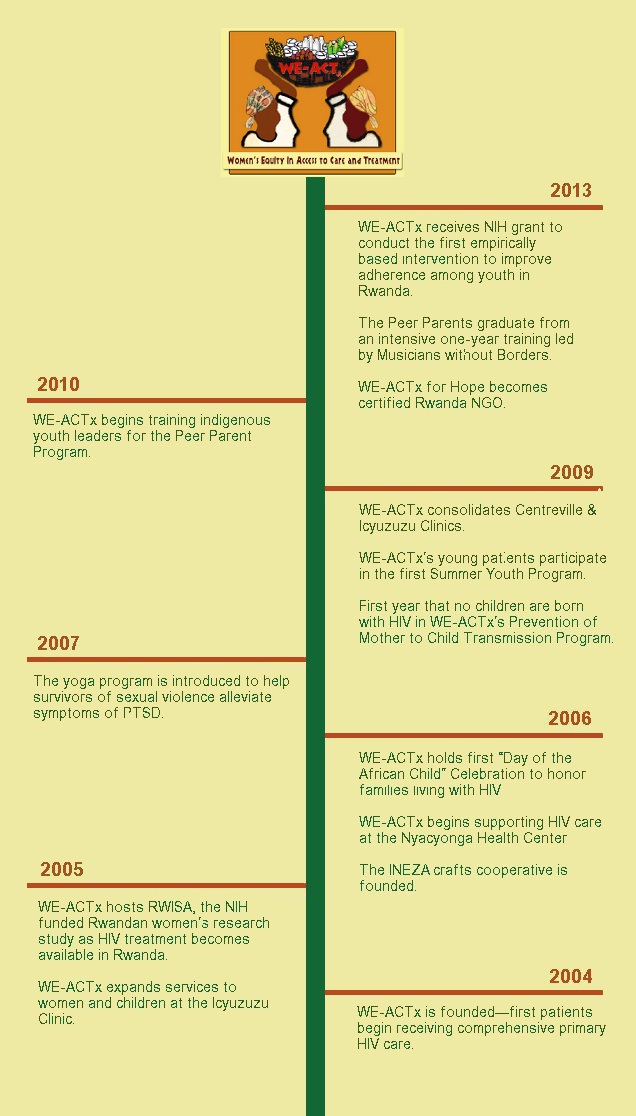
Ten years ago, Womens’s Equity in Access to Care and Treatment (WE-ACTx) answered a call from Rwandan women’s associations to help women with HIV gain access to life saving antiretroviral therapy. Many of the women in these associations had been raped and infected during the genocide and were becoming sicker and had no medicines for HIV. The men who had raped them were in jail and they were receiving medicines for their HIV infection. Working with these grassroots women’s groups and the Rwandan public health system, WE-ACTx set up a clinic to quickly assess and start these women on antiretroviral medications for HIV.
The program expanded over the last decade and has provided comprehensive medical and psychosocial care to over 3000 women, men and children with HIV. Mental health treatment, support groups, nutritional supplements, income generation, vocational training, school fees, peer advocacy, children and youth friendly programs have made a tremendous impact in improving the health and well being of the patients. This all Rwandan staffed multidiscplinary program is a model for high quality HIV care in sub-Sarharan Africa.
www.we-actx.org
May 23rd, 2015
Dear friends,
As spring awakens all around us, I’m writing to you to support our work in Rwanda. As you know, WE-ACTx usually sends only one annual mailing to supporters. But in the past few months, some of you responded to my February letter from Kigali and asked how you might help the many young patients who want to go to school and get job training to better their future. Many of you already sent donations specifically for school fees and to support students who had been denied schooling because of disabilities. We were very moved by this outpouring and are sending this mid-year appeal specifically to solicit support for this new initiative.
Because our two WE-ACTx for Hope clinics provide high quality care for over 2500 persons with HIV in Kigali, there are now 600 patients under 24 who are getting stronger and healthy, and are hopeful that they may have long and productive lives. But antiretroviral pills and nurses are not enough to make this happen. Likewise, just giving school fees will not automatically result in educational achievement. The broad array of problems (stigma, poverty, unstable housing, abuse) facing families with HIV puts these youngsters at risk for failure to complete secondary school and find jobs. Only by addressing these needs will we be able to help these families provide the foundation needed for successful learning.
In March 2015, WE-ACTx for Hope began a yearlong intensive effort “Spring to Successful Schooling” to assess and address these needs and help facilitate a pathway to a better future for our youngest patients. During this year we plan to:
- Conduct in-depth individual and family assessments by a multidisciplinary team of doctors, nurses, counselors, and psychologists to identify and address the most pressing challenges facing these families (unstable housing, drug and alcohol problems, incarceration, severe poverty, abuse and neglect)
- Identify parents who may not be taking their antiretroviral medications regularly to promote better adherence strategies for the whole family
- Sensitize and provide family planning to young women aged 18 (youngest age this is legally permitted) -24, to prevent unwanted pregnancies and enable reproductive choice
- Utilize peer counselors to sensitize older girls and boys to treat each other respectfully and understand gender based violence
- Identify and address school problems including stigma, discrimination and need for tutoring
- Seek community support for stable housing
- Increase access to school and job training for those with disabilities and limited opportunities
- Work with older youth to find vocational and university opportunities and funding
Please help our “Spring to Successful Schooling” campaign. Your support will help our staff launch this important project this year as well as help the youngest WE-ACTx patients have a better future.
I look forward to giving you more details when I write you again from Kigali during my upcoming visit in June.
Thanks for all your support,
Mardge Cohen
Medical Director, WE-ACTx
You can support our Spring to Successful Schooling campaign by donating
using the above “Donate” button or by mailing checks to
WE-ACTx
584 Castro St. #416
San Francisco, CA 94114
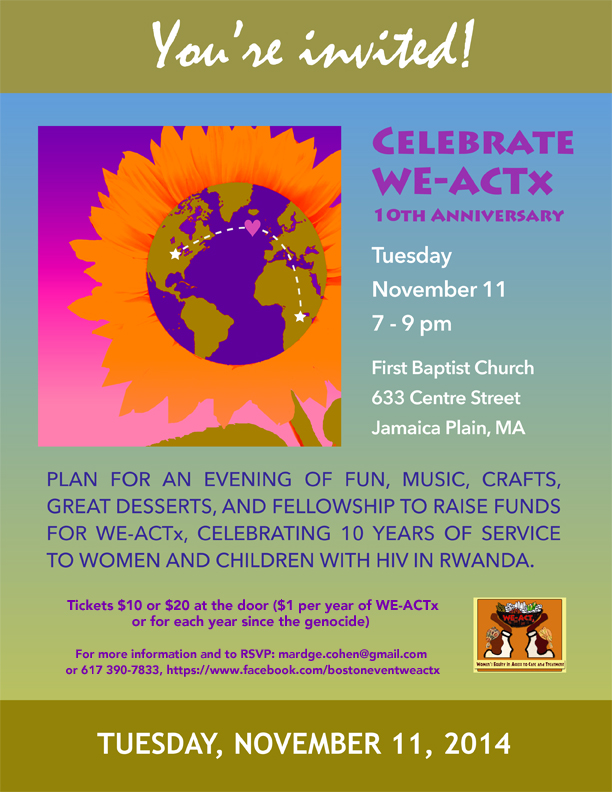
To RSVP: mardgecohen@gmail.com
For more information: www.facebook.com/bostoneventweactx
Please feel free to forward this invitation to family and friends.
ALL ARE WELCOME!
Ten years ago, Womens’s Equity in Access to Care and Treatment (WE-ACTx) answered a call from Rwandan women’s associations to help women with HIV gain access to life saving antiretroviral therapy. Many of the women in these associations had been raped and infected during the genocide and were becoming sicker and had no medicines for HIV. The men who had raped them were in jail and they were receiving medicines for their HIV infection. Working with these grassroots women’s groups and the Rwandan public health system, WE-ACTx set up a clinic to quickly assess and start these women on antiretroviral medications for HIV.
The program expanded over the last decade and has provided comprehensive medical and psychosocial care to over 3000 women, men and children with HIV. Mental health treatment, support groups, nutritional supplements, income generation, vocational training, school fees, peer advocacy, children and youth friendly programs have made a tremendous impact in improving the health and well being of the patients. This all Rwandan staffed multidiscplinary program is a model for high quality HIV care in sub-Sarharan Africa.
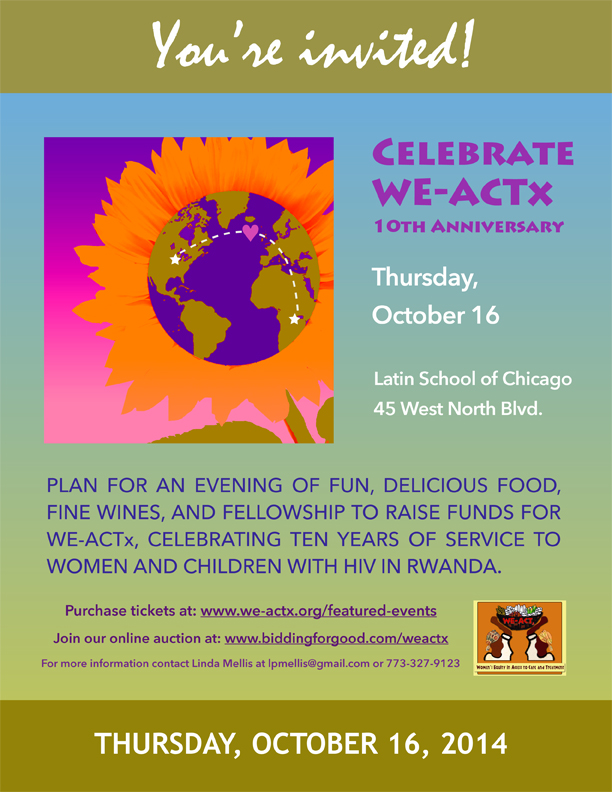
The 10th Anniversary Celebration to benefit WE-ACTx
October 16th, 2014, 6-8:30 P.M.
Latin School of Chicago
45 W. North Blvd
Chicago, ILSilent and live auctions, food, Rwandan Craft sale – all to raise money for our two WE-ACTx clinics in Rwanda.
Can’t make it? Make a donation!
Here is what your ticket or donation can really do!
WE-ACTx BENEFIT TICKET PRICES
$100 Family Caregiver
Supports a peer advocate salary for 1 week$150 Health Maintainer
Supports eight youth peer outreach counselors for one month$250* Comprehensive Caregiver
Pays for one week of nutritional snacks for 250 youth at Sunday support group$700* Group Practitioners Table for 8
Pays for a Youth Coordinator for one month$1,300* Clinic Level Supporter – Two tables for eight
Supports a head nurse for one month$50 Community Health Supporter
Student Ticket
Provides emergency assistance for a family for one week*Name listed in program book
Purchase Tickets
Auction
Auction items range from vacation getaways to donated items guaranteed to delight and surprise.
Let the bidding begin!
Event Location:
LATIN SCHOOL OF CHICAGO – MIDDLE SCHOOL,
45 West North Boulevard, Chicago, Illinois 60610
For Inquiries contact Linda Mellis at 773.327.9123
or by email at lpmellis@gmail.com

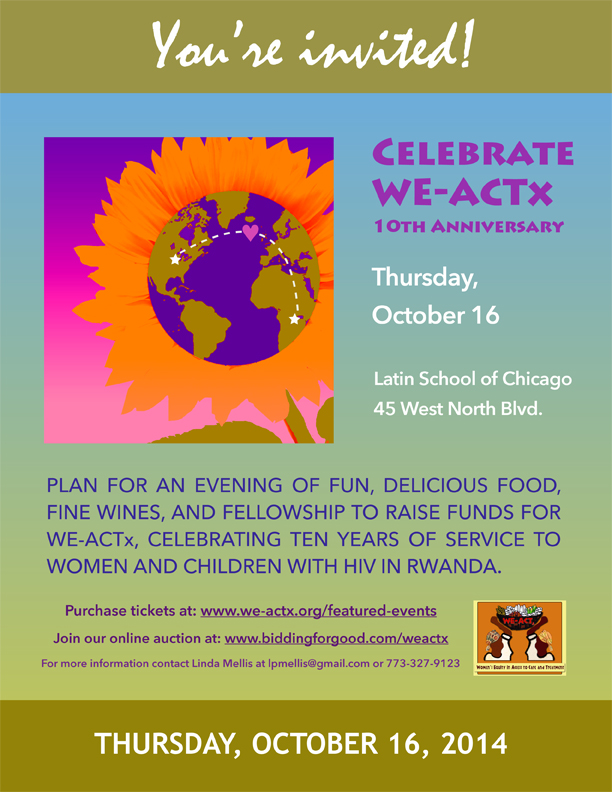
The 10th Anniversary Celebration to benefit WE-ACTx
October 16th, 2014, 6-9 P.M.
Latin School of Chicago
45 W. North Blvd
Chicago, IL
Silent and live auctions, food, Rwandan Craft sale – all to raise money for our two WE-ACTx clinics in Rwanda.
Can’t make it? Make a donation!

Click to join our on-line auction
Location

Save the Date!
October 16th
The 10th Anniversary Celebration to benefit WE-ACTx
October 16th, 2014, 6-9 P.M.
The Latin School of Chicago
Silent and live auctions, food, Rwandan Craft sale – all to raise money for our two WE-ACTx clinics in Rwanda. More info will be posted soon. Can’t make it? Make a donation!
Can’t make it? Make a donation!
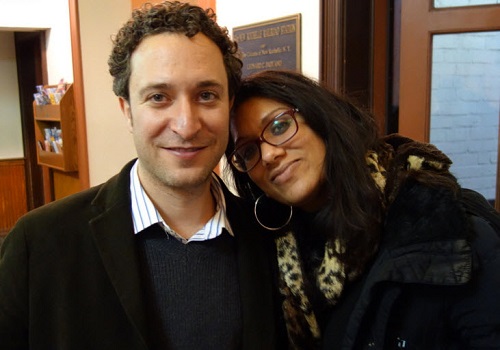
Eugene and Hima were fortunate to be able to visit Rwanda while Eugene’s mom, Mardge, was working there last January. They saw the WE-ACTx clinic as well as participated in caring for patients at the nearby hospital, CHUK, within the infectious disease department. They were so moved by what they saw, and by the people they met, and want to nurture their connection with Rwanda and WE-ACTx.
They are asking their family and friends to celebrate their love and marriage by donating to WE-ACTx to help women and children in Rwanda also have healthier and happy lives.
Here’s what your donations will do:
| $30 | emergency social assistance for a week |
| $75 | transport for 1 child to weekly support groups for a year |
| $150 | SOSOMA nutritional supplement for a youth with HIV and his/her family of 6 for a year |
| $250 | supports a clinical nurse for a month |
| $500 | supports youth program coordinator and 20 youth peer parents for a month |
To donate Click here 
To Donate by Mail:
Mail your tax deductible donations made payable to WE-ACTx to:
WE-ACTx
584 Castro Street #416
San Francisco, CA 94114
415-863-4676 x3
WE-ACTx is a US based, 501C3 tax exempt organization, EIN# 56-2572210
Learn more about WE-ACTx at www.we-actx.org or click here
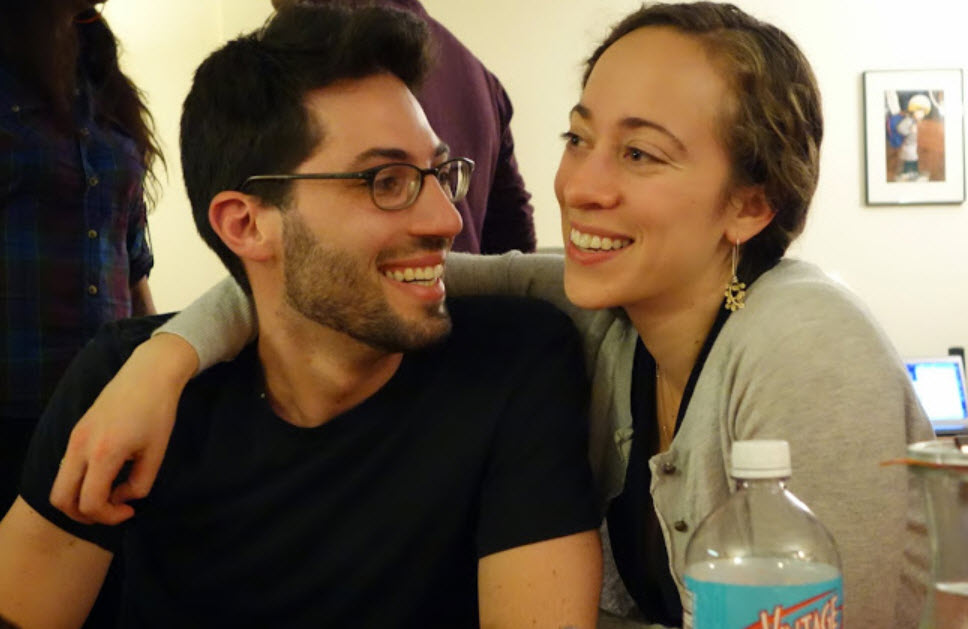
Davida’s mom Mardge helped start WE-ACTx in 2004 in Kigali, Rwanda to provide emergency care for women who were infected with HIV during the genocide. Davida spent a month working with WE-ACTx during medical school.
Davida and Sim are thrilled to share their love and good fortune with the patients and staff of WE-ACTx. They’ve already created a home together, and don’t need material gifts to fill it. They would rather share the joy of their union by supporting WE-ACTx’s mission in Rwanda. The good will of your donation warms their hearts and will help many patients with HIV and their families become healthier and live longer, and build a better world.
Here’s how far your donations can go:
| $30 | emergency social assistance for a week |
| $75 | transport for 1 child to weekly support groups for a year |
| $150 | SOSOMA nutritional supplement for a youth with HIV and his/her family of 6 for a year |
| $250 | supports a clinical nurse for a month |
| $500 | supports youth program coordinator and 20 youth peer parents for a month |
To donate Click here
To Donate by Mail:
Mail your tax deductible donations made payable to WE-ACTx to:
WE-ACTx
584 Castro Street #416
San Francisco, CA 94114
415-863-4676 x3
WE-ACTx is a US based, 501C3 tax exempt organization, EIN# 56-2572210
Learn more about WE-ACTx at www.we-actx.org or click here
A HEARTY THANK YOU TO ALL OUR AMAZING SUPPORTERS IN CHICAGO!
photo by Emily Grimes
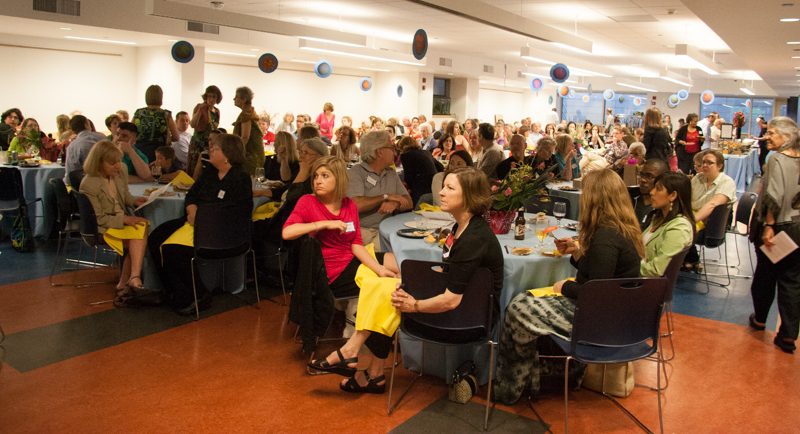
In Chicago, there’s a special kinship for the WE-ACTx community in Rwanda. More than 200 people participated in a fundraiser at The Latin School of Chicago on Thursday, May 16, to celebrate and support nine years of breathtaking progress in Rwanda.
The spring benefit, which raised nearly $40,000, brought this enthusiastic group up to date with WE-ACTx, as it raised more funds than ever before.
Aime Ndorimana photo by Emily Grimes
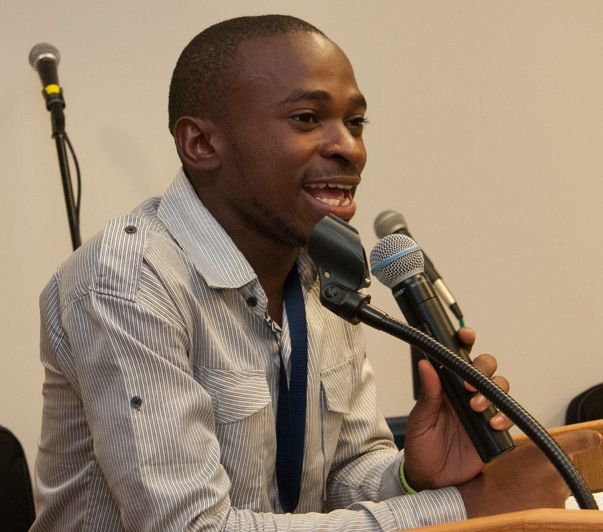
Mardge Cohen, WE-ACTx’s Co-Founder and Medical Director introduced Aimé Ndorimana, WE-ACTx peer youth educator from Kigali. He told those gathered about how WE-ACTx youth are fighting HIV stigma and discrimination, and produced a powerful short film, which he screened.
photo by Deborah Heer
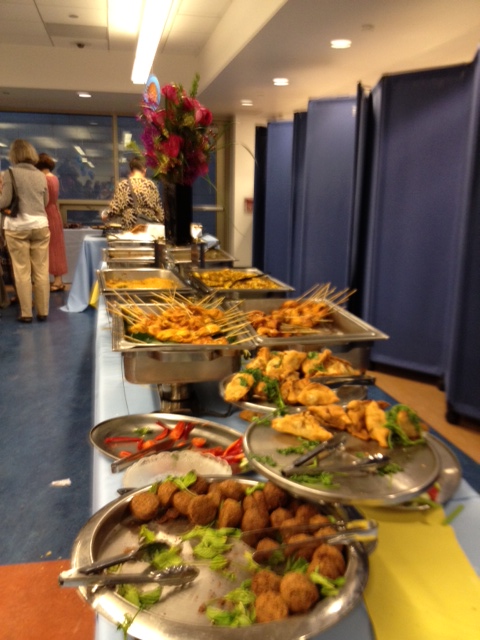
Chicago supporters enjoyed fellowship, delicious food by Quest, shopped for treasures from a varied array of the INEZA cooperative’s hand-crafted items, and bid on silent and live auction items provided by more than 100 generous donors.
For the first time this year, WE-ACTx’s silent auction launched online two weeks prior to the event , dramatically widening the bidding audience.
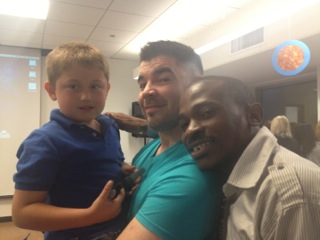
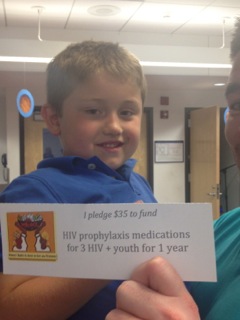
Nico Olszewski from West Chicago, IL at the fundraiser where he made his contribution. When his school found out, they gave him an outstanding service award!.
Even if you missed the event or the auction, you can still play a role by helping WE-ACTx with a donation.

Here is what your ticket or donation can really do!
WE-ACTx BENEFIT TICKET PRICES
$85 Family Caregiver
Supports a peer advocate salary for 1 week$150 Health Maintainer
Supports eight youth peer outreach counselors for one month$250* Intensive Caregiver
covers specialist pediatric consultation for mothers and children for 2 weeks$600* Group Practice Table for 8
stocks the WE-ACTx pharmacy for 1 week$1,100* Preventive Health Care Provider Two Tables for 8
pays for transportation and nutrition for 250 children for 2 weeks$35 Community Health Supporter
Limited income and students
Supports HIV prophylaxis medicine for three HIV+ teenagers for one year*Name listed in program book
The on-line portion of our fundraising auction is now closed. Come to the WE-ACTx celebration on May 16 to finish bidding at the live auction!
Auction items range from vacation getaways to donated items guaranteed to delight and surprise.
Let the bidding begin!

Event Location:
LATIN SCHOOL OF CHICAGO – MIDDLE SCHOOL,
45 West North Boulevard, Chicago, Illinois 60610For Inquiries contact Linda Mellis at 773.327.9123
or by email at lpmellis@gmail.com
Primary Health and Empowerment of Women and Girls female student WE-ACTx’s model of primary health care service delivery is guided by a commitment to local women’s empowerment, decentralized health service delivery through the public sector, program planning based on community-identified needs, and a family-centered model of health care and support service delivery.
Our HIV treatment and other clinical care services are wrapped around primary care and other support services organized through deep community outreach via local grassroots partner associations. Currently WE-ACTx works with 24 local partner associations in various capacities, providing training and support to association members, and collaborating in the implementation of a variety of prevention and education & support services for community members, i.e. mobile counseling and testing services (VCT), trauma counseling for both women and children who receive testing services or have been subject to sexual violence, home visits by nurses and peer advocates to assist children and parents with medical follow-up, including nutritional needs and mental health issues, assistance with design and implementation of income-generating activities for association members, training in rights and legal self-advocacy for HIV+ persons, and support for children’s education and nutritional needs.
Our vision is to progressively deepen community-level skills and capacity-building for HIV infected and affected women and their families in providing gender sensitive health and social support services to vulnerable women, children, and families, and to efficiently link those needing HIV treatment and clinical care immediately into high quality clinical services, and support services which we know to support adherence to treatment regimes.
Document Downloads: Overlapping Epidemics
— Short Report (PDF)
— Full Report (PDF)
US Office
3345 22nd street
San Francisco, CA 94110
(415) 648-1728
Rwanda Office
Box 5141
Kigali, Rwanda
(+250) 0830 2089
Contact: Anne-christine d’Adesky
(415) 690-6199 cell
PRESS RELEASE
December 1, 2006
New Report Highlights Challenges of Integrating
Food into HIV Programs
More holistic global model of care & new development partnerships with focus on poverty needed to respond to urgent demand for food by millions with HIV and AIDS in hard-hit regions.
San Francisco-A new report entitled “Overlapping Epidemics: Challenges and Strategies for Integrating Nutrition and HIV Programs” – Grassroots Perspectives on a Global Problem” is being issued today by the Women’s Equity in Access to Care and Treatment (WE-ACTx). WE-ACTx is an international nonprofit AIDS program that began working in Rwanda in 2004 to provide HIV care and antiretroviral (ARV) treatment access to genocide and rape survivors, in partnership with the Rwandan government and local NGOs. WE-ACTx runs two clinics in Kigali serving ~ 5000 clients.
The new report examines the challenges facing grassroots AIDS groups and provider NGOs globally who are facing a rising demand for food that experts say may soon eclipse antiretroviral medicine. The report summarizes the views and ‘best practice’ ideas of representatives in international and local agencies working across the fields of HIV/AIDS, nutrition and development. Research for the report was supported by a grant from Keep a Child Alive (KCA) in New York.
“WE-ACTx is facing the urgent challenge that most groups working in the field of AIDS in poor countries are dealing with today, which is hunger and poverty that are root causes of the epidemic,” said Anne-christine d’Adesky, co- author of the report, and Executive Co-Director of WE-ACTx. She is also author of the 2004 global AIDS book, ‘Moving Mountains,’ which profiled challenges and successful efforts of early pioneers introducing HIV treatment around the world.
“Food remains the number one need of many of our clients, alongside antiretrovirals,” said d’Adesky. “Without food, people are often reluctant to start ARVs, which may be difficult to take without food, or they struggle to maintain good health if they lose access to food. We need global AIDS policies and more holistic, practical guidelines that address the link of HIV to food insecurity and poverty and gender inequity — and their impact on each other.”
WE-ACTx has been working with Rwandan NGO partners to identify and implement innovative solutions that support sustainable food access for HIV clients. “We particularly wanted to identify best practice approaches that can be shared with other grassroots groups,” said d’Adesky.
Among the findings of the report:
- Malnutrition, food insecurity and poverty remain critically overlooked factors in the global HIV pandemic. According to the UN World Food Programme, 13.8 million people will need access to HIV/AIDS care by 2008, and 6.4 million of them will need nutritional support. Out of 6.6 million also needing access to ARVs, 0.9 million will need food aid. The demand for food will increase as more people access ART based on present trends.
- The devastating impact of AIDS on the rural agricultural sector is greatly increasing food insecurity and especialy. threatens women who make up the majority of smallholder farmers in hardest-hit southern Africa. One analyst warned in 2003 that, in extremis, AIDS could produce a new ‘variant famine’ targeting rural Africans.
- Extreme poverty threatens to blunt the benefit of HIV therapy for severely malnourished individuals, who are six times more likely to die than those on ART who are not malnourished. Malnutrition decreases one’s ability to absorb HIV medicine and cope with drug side effects, and prolongs the length of recovery to natural immunity.
- Globally a more holistic model of HIV care that integrates nutrition and nutrition education, and sustainable food security and livelihood strategies is needed to address the root issue of poverty. Field providers call upon the World Health Organization to move faster to quickly develop and disseminate practical holistic field guidelines to help guide those implementing programs at the grassroots level.
- A multisector “partnership” approach can bring together groups working HIV and AIDS with those working in sustainable development fields. The private sector has an important role to play, helping to manufacture food, providing business resources to local NGOs, and opening markets for products made by their HIV clients.
- Nutrition is not specifically mentioned in the global ‘Three Ones’ principles adopted in 2001 as a framework for harmonizing national HIV programs.
- Funding for nutrition must be included in funding mechanisms to scale-up global access to HIV treatment. Experts estimate the global cost of providing nutrition to HIV-positive individuals for the next two years to be $1.1 billion — just 2% of $55 billion required to tackle the pandemic by 2008.
- A household vs. individual approach to nutrition, food access and security, and HIV is best to address the dynamic impact of overlapping illness and chronic poverty that affects families with HIV-affected members.
- Gender inequity contributes to a higher degree of poverty, malnutrition and vulnerability to HIV in women and requires specific strategies aimed at empowering women. Securing property and inheritance rights for women and children is an essential part of battling poverty.
- A range of nutrition interventions should be considered within a continuum of HIV care model, with a range of entry and exit points for interventions at different stages of malnutrition, illness and HIV status. Short-term food aid is a lifesaving intervention for severely malnourished HIV-positive individuals and needed by many starting ART, but should be linked to sustainable food security or income generation programs.
- The nutritional needs of HIV-positive refugees requires better coordination by humanitarian, refugee affairs, and public health providers with local community groups, and benefits from input by refugees into program design.
This report will be available at the WE-ACTx and KCA websites (www.we-actx.org | www.keepachildalive.org).
PRESS RELEASE
Contact: Anne-christine d’Adesky
(415) 690-6199 cell
December 1, 2006
New Report Highlights Challenges of Integrating Food into HIV ProgramsMore holistic global model of care & new development partnerships with focus on poverty are needed to respond to urgent demand for food by millions with HIV and AIDS in hard-hit regions.
Boston, November 6 – A new report entitled “Overlapping Epidemics: HIV/AIDS, Hunger and Poverty — Challenges and Strategies for Integrating Nutrition and HIV Programs,” is being issued today by the Women’s Equity in Access to Care and Treatment (WE-ACTx). WE-ACTx is an international nonprofit AIDS program that began working in Rwanda in 2004 to provide HIV care and antiretroviral (ARV) treatment access to genocide and rape survivors, in partnership with the Rwandan government and local NGOs. WE-ACTx runs two clinics in Kigali serving ~ 5000 clients. The new 140-page report examines the challenges facing grassroots AIDS groups and provider NGOs globally who are facing a rising demand for food that experts say may soon eclipse antiretroviral medicine. The report summarizes the views and ‘best practice’ ideas of representatives in international and local agencies working across the fields of HIV/AIDS, nutrition and development. Research for the report was supported by a grant from Keep a Child Alive (KCA) in New York. “WE-ACTx is facing the urgent challenge that most groups working in the field of AIDS in poor countries are dealing with today, which is hunger and poverty that are root causes of the epidemic,” said Anne-christine d’Adesky, primary author of the report, and Executive Co-Director of WE-ACTx. She is also author of the 2004 global AIDS book, ‘Moving Mountains,’ which profiled challenges and successful efforts of early pioneers introducing HIV treatment around the world.”Food remains the number one need of many of our clients, alongside antiretrovirals,” said d’Adesky. “Without food, people are often reluctant to start ARVs, which may be difficult to take without food, or they struggle to maintain good health if they lose access to food. We need global AIDS policies and more holistic, practical guidelines that address the link of HIV to food insecurity and poverty and their impact on each other.” WE-ACTx has been working with Rwandan NGO partners to identify and implement innovative solutions that support sustainable food access for HIV clients. “We particularly wanted to identify best practice approaches that can be shared with other grassroots groups,” said d’Adesky.
Among the findings of the report:
- Malnutrition, food insecurity and poverty remain critically overlooked factors in the global HIV pandemic. According to the UN World Food Programme, 13.8 million people will need access to HIV/AIDS care by 2008, and 6.4 million of them will need nutritional support. Out of 6.6 million also needing access to ARVs, 0.9 million will need food aid.
- Extreme poverty threatens to blunt the benefit of HIV therapy for severely malnourished individuals, who are six times more likely to die than those on ART who are not malnourished. Malnutrition decreases an HIV-positive person’s ability to absorb medicine and cope with drug side effects, and prolongs the length of recovery to natural immunity.
- Globally a more holistic model of HIV care that integrates nutrition and nutrition education, and sustainable food security and livelihood strategies is needed to address the root issue of poverty. Field providers call upon the World Health Organization to move faster to quickly develop and disseminate practical holistic field guidelines to help guide those implementing programs at the grassroots level.
- A multisector “partnership” approach can bring together groups working HIV and AIDS with those working in sustainable development fields. The private sector has an important role to play, helping to manufacture food, providing business resources to local NGOs, and opening markets for products made by their HIV clients.
- Nutrition is not specifically mentioned in the global ‘Three Ones’ principles adopted in 2001 as a framework for harmonizing national HIV programs.
- Funding for nutrition must be included in funding mechanisms to scale-up global access to HIV treatment. Experts estimate the global cost of providing nutrition to HIV-positive individuals for the next two years to be $1.1 billion — just 2% of $55 billion required to tackle the pandemic by 2008.
- A household vs. individual approach to nutrition, food access and security, and HIV is best to address the dynamic impact of overlapping illness and chronic poverty that affects families with HIV-affected members.
- Gender inequity contributes to a higher degree of poverty, malnutrition and vulnerability to HIV in women, including women-headed households, and girls, and requires specific strategies aimed at empowering women. Securing property and inheritance rights for women and children is an essential part of battling poverty.
- A range of nutrition interventions should be considered within a continuum of HIV care model, with a range of entry and exit points for interventions at different stages of malnutrition, illness and HIV status. Nutrition interventions aimed at malnourished pregnant women and orphans and vulnerable children with HIV are critical. Short-term food aid is a lifesaving intervention for severely malnourished HIV-positive individuals and needed by many starting ART, but should be linked to sustainable food security or income generation programs.
- The nutritional needs of HIV-positive refugees requires better coordination by humanitarian, refugee affairs, and public health providers with local community groups, and benefits from input by refugees into program design.
Throughout Liberia’s 14 years of civil war, the use of rape and sexual violence as a weapon of war was all too common. Although the war itself came to an end in August 2003 and the country has been disarmed since that time, sexual violence continues to affect Liberians. It is now estimated that 40 percent or more of women and girls in Liberia have experienced some form of sexual violence. In order to treat the overwhelming number of rape victims, Doctors Without Borders/Médecins Sans Frontières (MSF) set up treatment and counseling centers in three camps for internally displaced people north of the capital city of Monrovia as well as at Benson Hospital in the capital itself, where 60 percent of the Liberian population lives. Recently MSF teams in Nimba, a county northeast of the capital, have also begun work on issues pertaining to gender-based violence.Rebecca Singer is a nurse from Denver, Colorado, who has spent five months working with MSF to provide treatment and support for victims of rape and other forms of sexual violence at Benson Hospital’s Gender-Based Violence Clinic. Rebecca writes of her experiences thus far in Monrovia.
Women's Equity in Access to Care & Treatment